Soap Colorant Chart: Mica, Oxides, Dyes and Natural Colors Compared
Published How we research
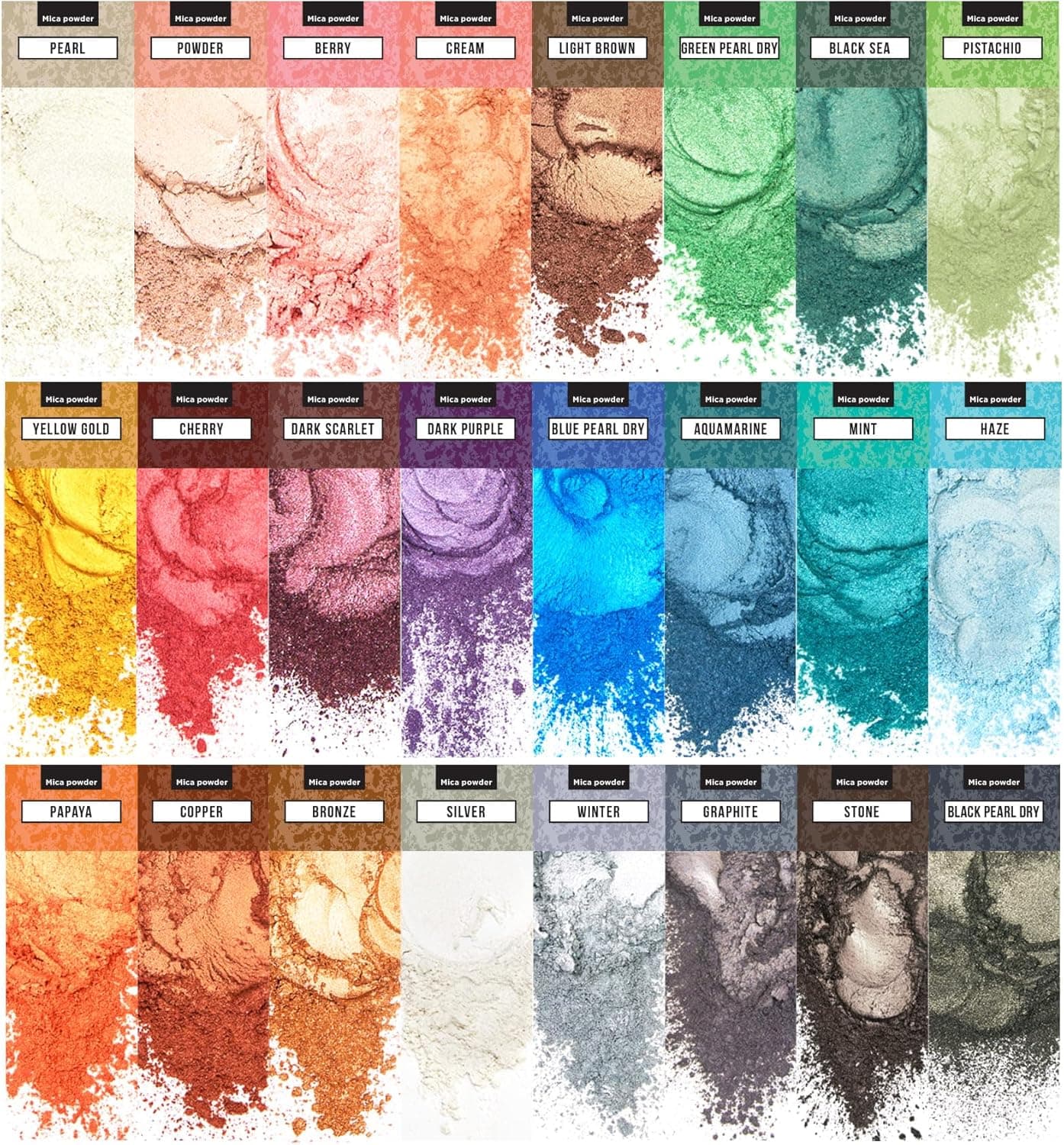
Soap colorants fall into two groups: insoluble pigments (mica, oxides, ultramarines, titanium dioxide, clays, charcoal) that stay put and survive cold process well, and soluble dyes that give clear, bright color but bleed and can shift at high pH. Pick pigments for cold process and layered designs, dyes for clear melt and pour. The chart below gives each type's look, a typical starting amount per pound of oils (ppo) or per pound of melt and pour base, how stable it is, and the trade-off to watch. Usage numbers are common starting points, not recipe rules: test small and adjust.
Quick chart: which soap colorant for which job
Mica: shimmer and pearl, bright colors. Cold process about 1 tsp ppo, melt and pour about 1/4 to 1/2 tsp per pound of base. Stability depends on the shade, buy ones labeled cold process stable. Does not bleed.
Oxides and ultramarines: matte, opaque, strong color. About 1/4 to 1/2 tsp ppo, dispersed first. Very stable in cold process, do not bleed. Fewer bright shades than mica.
Titanium dioxide: whitens and brightens other colors. About 1/2 to 1 tsp ppo. Stable. Heavy use is linked to glycerin rivers in soap that gels.
Soap dyes and liquid colorants: transparent color for clear melt and pour, a few drops per pound. Bleed between layers, some morph in cold process. Liquid colorants that are premixed pigment behave like the pigment inside.
Clays, botanicals and activated charcoal: soft natural tones and black. Clay about 1 to 2 tsp ppo, charcoal about 1/2 to 1 tsp ppo, botanicals vary widely. Many botanicals fade with light and time.
Mica: shimmer, wide palette, check cold process stability
Cosmetic mica is a mineral flake coated with color, which is where the shimmer comes from. It is the most popular soap colorant because the palette is huge and it works in both methods. Disperse it before use: about 1 tsp of mica stirred into 1 tbsp of a light liquid oil from your recipe for cold process, or into a little rubbing alcohol or glycerin for melt and pour, so it does not clump into specks.
The catch is pH. Some shades, especially certain purples, pinks, reds and blues, morph or fade in fresh cold process soap. Suppliers that test their micas label the ones that hold up. In melt and pour almost any cosmetic mica works, and a light dusting on top of a finished bar gives a metallic sheen that dyes cannot.
Oxides and ultramarines: the stable choice for cold process
Iron oxides (reds, yellows, browns, black), chromium oxide green and ultramarines (blue, violet, pink) are lab-made pigments that soap makers rely on when the color in the mold must match the cured bar. They give matte, opaque color, do not migrate between layers and hold up at the pH of raw soap.
They are strong, so a little goes a long way: a common approach is 1 tsp of oxide dispersed in 1 tbsp of oil or glycerin, then adding that dispersion to the batter until it reaches the shade. Undispersed oxide leaves streaks and specks, and too much can tint the lather. The palette is narrower and less vivid than mica, so many makers mix the two: oxide for a solid base color, mica on top for shine.
Titanium dioxide: white, and the base for pastels
Titanium dioxide is the standard white pigment in soap. It makes a bar brighter white, lightens other colors into pastels and gives opacity to clear melt and pour. It is sold as oil-dispersible or water-dispersible; use the type that matches the liquid you will disperse it in, or it clumps.
Start around 1/2 tsp ppo and work up toward 1 tsp for a bright white. More is not better: heavy titanium dioxide use is commonly associated with glycerin rivers, the translucent veins that show up in soap that went through gel.
Soap dyes and liquid colorants: clear color, with bleeding
Soap dyes are water-soluble colors sold in dropper bottles or as concentrated powders. They dissolve into the soap, which gives jewel-like transparent color in clear melt and pour base that no pigment can match. A few drops per pound of base is usually enough, and color reads stronger in clear base than in white.
Being soluble, dyes migrate: layers develop soft edges and embeds tint the soap around them over days or weeks. Some also shift or fade in cold process. Liquid colorants are a separate group worth reading closely, because many are pigments or micas premixed in glycerin or oil rather than dyes. Those behave like the pigment inside, so they do not bleed and suit cold process. The listing or the supplier's notes usually say which kind you are buying.
Natural colorants: clays, botanicals and activated charcoal
Cosmetic clays give soft, earthy color and a silky feel: rose and pink clays for dusty pinks, French green clay for sage, red Moroccan and other red clays for terracotta. A common range is 1 to 2 tsp ppo, mixed with a little distilled water or oil first. Clay also absorbs some water, which can speed trace slightly.
Botanicals are the least predictable group. Madder root, annatto seed, alkanet root, paprika, turmeric, indigo and spirulina all appear in natural soap recipes, added as a powder or infused into a portion of the oils. Strength varies by batch, many fade with light and age, and greens from plant powders often turn brown or olive over the cure. Indigo is very strong, so start with a pinch.
Activated charcoal gives gray at low doses and deep black at about 1/2 to 1 tsp ppo. Disperse it in oil first. Higher amounts can make the lather gray, which some users dislike.
Melt and pour vs cold process: which colorants to start with
For melt and pour, start with a small mica set and one or two soap dyes. Mica covers opaque and shimmery looks in white base, dyes cover glassy color in clear base, and neither has to survive raw lye. Add titanium dioxide if you want to turn clear base white for pastels.
For cold process, start with oxides and ultramarines for colors that must stay true, titanium dioxide for white, and a handful of micas labeled cold process stable for brighter accents. Add clays and charcoal for natural looks. Keep dyes and botanicals for experiments until you have tested them in a small batch, because both can change between the mold and the cured bar.
Frequently asked questions
What is the difference between a soap pigment and a soap dye? A pigment is an insoluble particle that sits in the soap, so it stays in its layer and is usually stable in cold process. A dye dissolves into the soap, giving transparent color that can bleed and sometimes shift at high pH.
Why did my purple soap turn gray or blue? Some purple micas and dyes are not stable at the pH of fresh cold process soap. Ultramarine violet or a mica the supplier labels cold process stable usually holds its color.
Can I mix colorant types in one bar? Yes, and it is common. Oxide for a solid base color with mica swirled on top, or titanium dioxide under a dye for a brighter pastel, are standard combinations. Disperse each one separately before adding it.
Do colorants change how a recipe behaves? At normal amounts most do not change your lye calculation. Clays can speed trace a little because they absorb water, and colorants dispersed in oil add a small amount of extra oil, which most makers ignore at these quantities.
Products from this article
The highest-scoring picks from the buying guides mentioned above. Scores are our editorial assessment, not customer ratings.
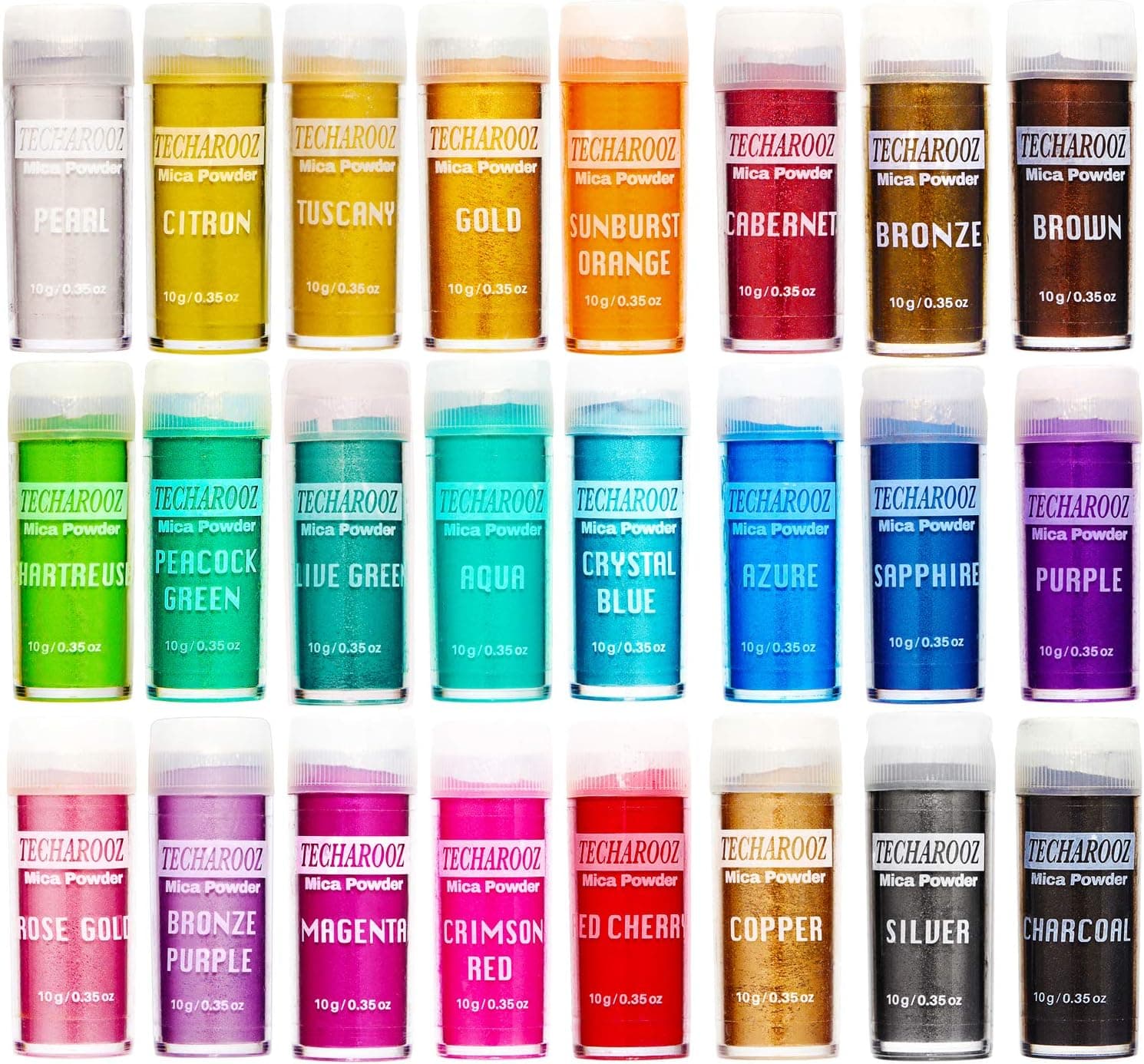
+ 10g each is a generous amount of mica per color for a set
From our guide: Best Mica Powder for Coloring Handmade Soap
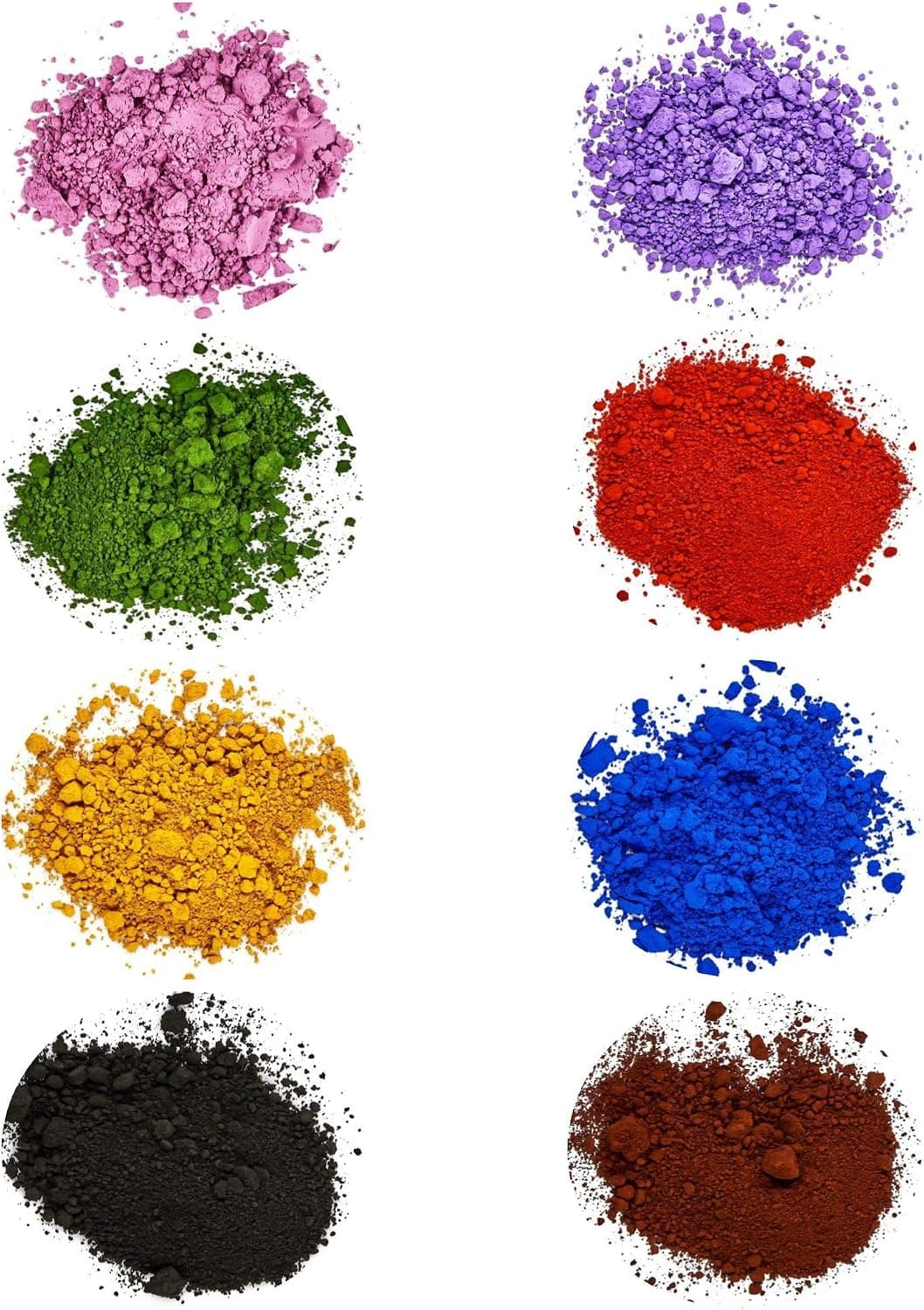
+ 8 oxide colors cover a full basic palette for cold process soap
From our guide: Best Oxides and Pigments for Coloring Soap
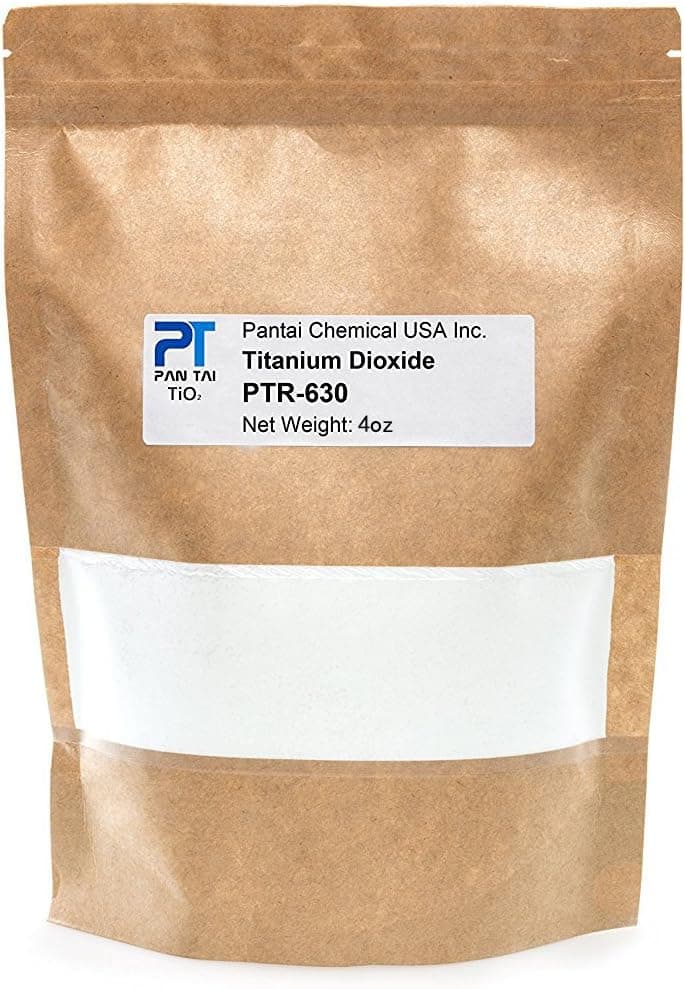
+ 16 oz supply lasts through many white or pastel soap batches
From our guide: Best Titanium Dioxide for Whitening Soap
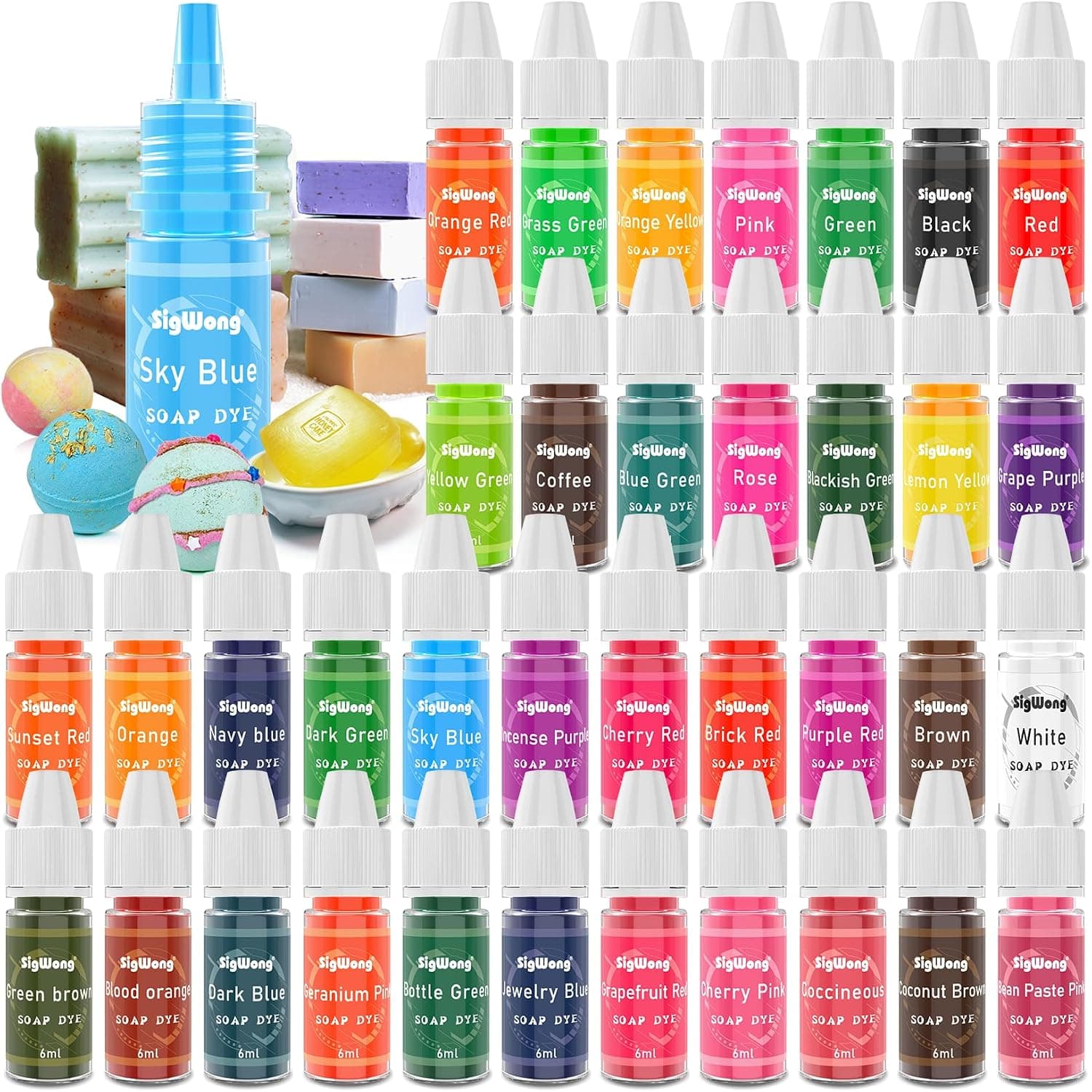
+ 36 Colors is one of the widest liquid dye ranges available
From our guide: Best Soap Dyes for Bright Handmade Bars
Popular right now
- Best Melt and Pour Soap BaseBuying guide
- Best Shea Butter for Soap MakingBuying guide
- Choosing Fragrance Oils for SoapArticle
- Embedding Objects in SoapArticle
- Best Natural Soap Colorants From Clays and BotanicalsBuying guide
- How to Use a Soap MoldArticle
Based on the last 28 days of search and visitor data.