Premium Oxide Pigment Powder Colorants Set - 8 Colors for Hand Soap Making Kit (.5 oz ea) - Non Bleeding Colorant Review (2026)
Updated September 21, 2026 · Research-based review
Our verdict
This unbranded oxide set packs 8 colors, red, blue, yellow, lavender, green, brown, black, and violet, at half an ounce each, marketed as non bleeding for hand soap. Oxides generally hold color well in cold process soap, but an unbranded set makes shade consistency harder to predict from batch to batch.
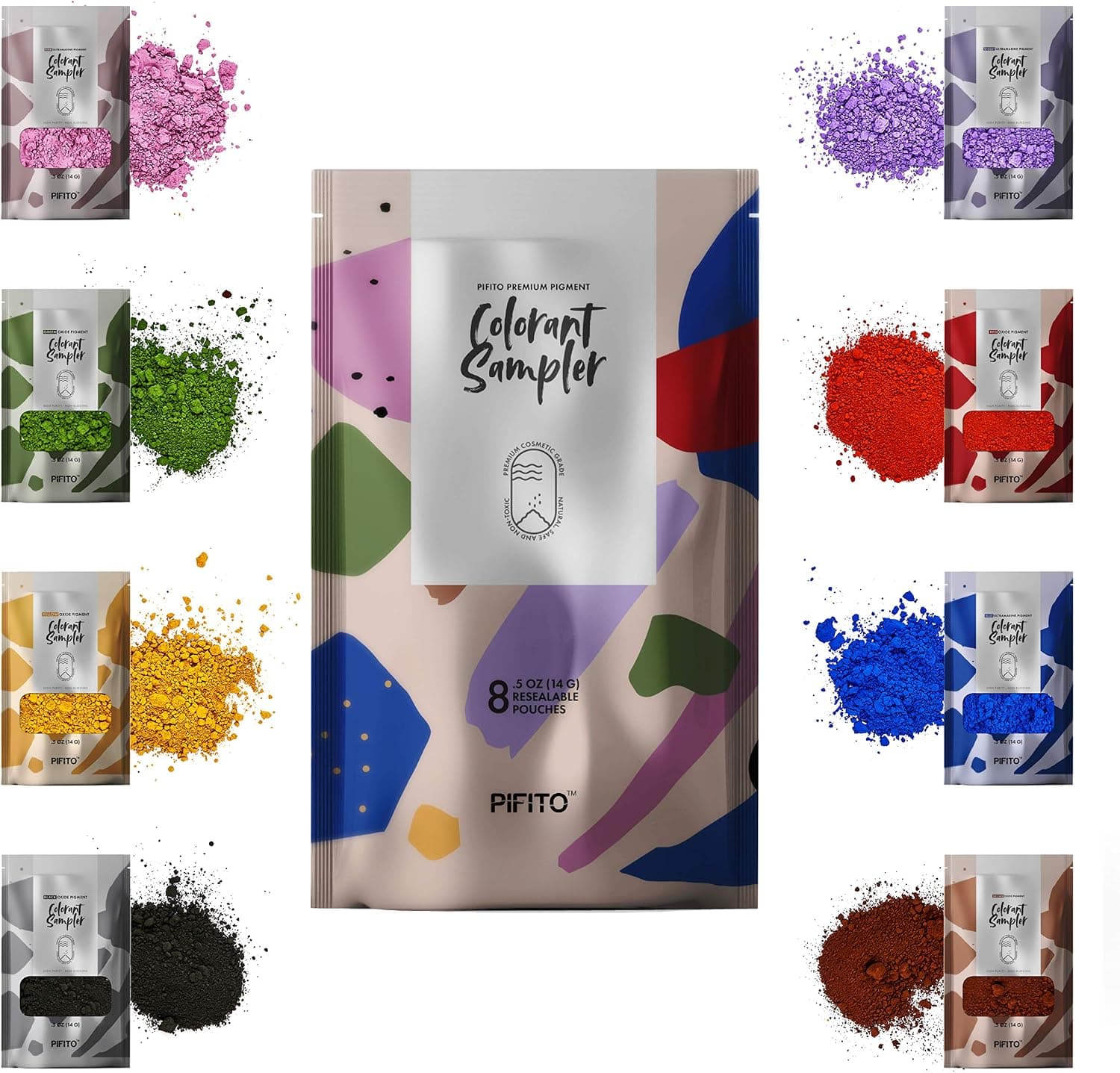
A premium oxide pigment powder set of 8 colors, .5 oz each, marketed as non bleeding for hand soap making.
Price range: See on Amazon
What we liked
- + Non bleeding oxides keep layers and swirls crisp in soap
- + 8 colors at .5 oz each give more pigment than tiny samplers
- + Oxides hold color well in high pH cold process recipes
Trade-offs
- - Shade can vary slightly by batch, so test a small swirl before a full pour
- - Matte oxide tones may disappoint makers wanting bright colors
What comes in the set
According to its Amazon listing, this set includes 8 colors, red, blue, yellow, lavender, green, brown, black, and violet, with about half an ounce of powder for each shade. The listing markets the powders as a non bleeding colorant intended for hand soap making, which is the main selling point distinguishing oxide pigments from mica. The set is sold without a prominent brand name attached in the listing itself, unlike some competing oxide sets from established soap supply companies, so a buyer is relying mainly on the product description rather than a recognized brand history for quality assurance.
Why oxides resist bleeding
Oxide pigments are mineral-based colorants that are generally more chemically stable in the alkaline environment of fresh soap batter than many dye-based or some mica colorants, which is why they have a reputation among soap makers for holding sharp lines in swirls and layered designs rather than migrating between colors as the soap cures. This set's own marketing leans on that non bleeding property directly in its title, which lines up with how oxides are typically described across the wider soap supply industry, rather than being an unusual or unverified claim specific to this particular seller.
What half an ounce per color covers
Oxide pigments are used at very small percentages of a soap recipe's total oil weight, so half an ounce of a single color can tint a meaningful number of cold process batches before running out, more so than the same weight would go in a fragrance or carrier oil. Exactly how many batches a given half ounce portion covers depends on how saturated a maker wants the final color and how much of the batch is being tinted, so testing a new color in a small trial batch first is the most reliable way to judge how far this particular set's colors will stretch. Keeping a simple log of the gram weight used per batch for each color also makes it easier to reorder a favorite shade before it runs out mid-project.
The tradeoff with an unbranded set
Buying oxide colorants from a set without a well known soap supply brand behind it means less of a track record to check before committing a full batch to a new color, compared with buying the same 8 hues from an established soap ingredient company. The colors themselves, red, blue, yellow, lavender, green, brown, black, and violet, cover a fairly standard soap-making palette, and oxides as a category tend to be forgiving and consistent regardless of source, but a cautious maker may still want to do a small test swirl with each new color before mixing it into a larger, sellable batch. Reading buyer feedback on the specific listing before ordering can also help flag any color that has run noticeably lighter or darker than expected for other soap makers.
Bottom line
This set gives a soap maker eight workable, non bleeding oxide colors in usable half ounce portions for a reasonable outlay, covering the core hues most cold process recipes call for. It suits makers comfortable testing a new colorant source in small batches first, since it lacks the track record of a name-brand soap supply company. For a maker who already has strong opinions on preferred pigment brands, this set functions best as an affordable way to fill out a color range rather than as a replacement for trusted staples.
Frequently asked questions
How many colors are in this oxide set
There are 8 colors: red, blue, yellow, lavender, green, brown, black, and violet, at about half an ounce each.
Will these oxides bleed between soap layers
The listing markets them as non bleeding, and oxide pigments as a category generally hold sharp lines better than many dye-based colorants.
Is this a well known soap supply brand
No, the listing does not carry a prominent, established soap-supply brand name, so it is worth test-batching a new color before a full run.
Can these oxides be used in melt and pour soap too
Oxide pigments generally work in both cold process and melt and pour bases, though the listing itself is framed around hand soap making.
Prices change often, so check the current price and availability on Amazon.
Check price on AmazonSoap Making Nest may earn a commission from the link above.