Coconut Oil Organic Soap Making Supplies, 32 fl oz DIY Projects Review (2026)
Updated September 14, 2026 · Research-based review
Our verdict
An organic coconut oil sold specifically for soap making in a 32 fl oz size, which suits makers who want a natural label on their oil list without buying a full gallon. The listing does not state a melt point grade, so it is worth confirming that detail before plugging it into a lye calculator.
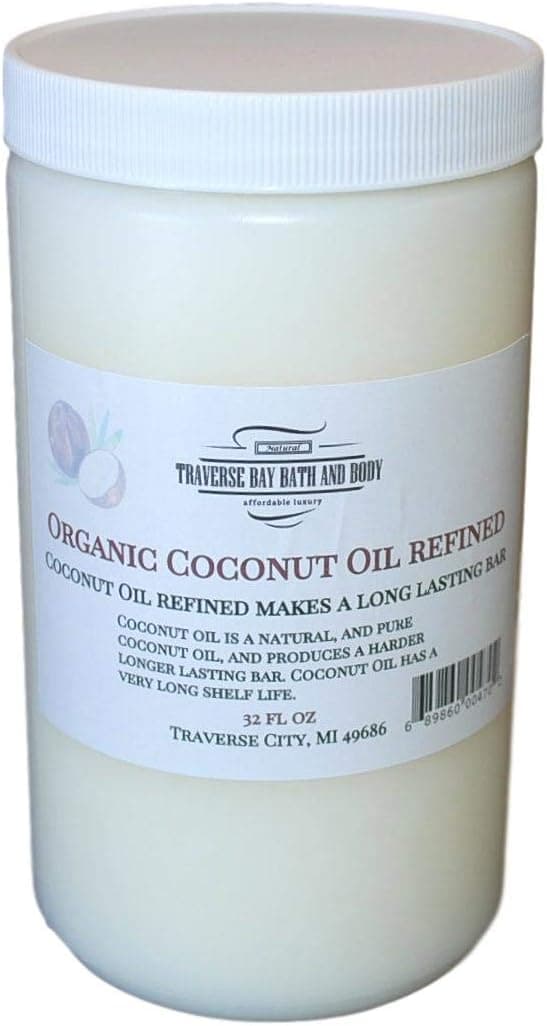
A 32 fl oz tub of organic coconut oil sold for soap making and DIY projects, for natural cold process recipes.
Price range: See on Amazon
What we liked
- + Organic coconut oil suits makers building natural soap lines
- + 32 fl oz is a good amount for many batches at standard percentages
- + Coconut oil brings cleansing power and lather to bar soap
Trade-offs
- - Check the melt point grade before entering it into your lye calculator
- - Store-brand tub, so check the organic certification details on the listing
Who this oil suits
This 32 fl oz tub from Traverse Bay Bath and Body targets soap makers building a natural or organic product line, since the organic label is the main thing that sets it apart from a standard coconut oil. It is sized for a maker doing regular but not high volume batches, larger than a tiny trial bottle but well short of a bulk pail, so it fits someone testing whether organic coconut oil is worth the switch before committing to a bigger container. Commercial soap makers running large weekly batches will likely find this size runs out quickly and should look at the same brand's larger pail options instead.
What the listing tells you
The product is marketed plainly as organic coconut oil for soap making and DIY projects, sold by volume at 32 fl oz. Coconut oil in general is prized in cold process soap for the hard, cleansing, heavily lathering bar it produces, especially at the 15 to 30 percent range many recipes use. What the listing does not spell out is the melt point grade, such as 76 degree or 92 degree, which other coconut oil listings from the same style of seller do specify. Since melt point affects how the oil behaves at room temperature and can shift lye calculator entries slightly, it is worth checking with the seller or testing a small batch before scaling up a recipe around this specific oil.
Working with it in the workshop
Coconut oil is solid at typical room temperature and needs to be melted before it can be measured accurately by weight for a lye calculator, so plan on a short melting step before oils go into the pot. Because coconut oil brings strong cleansing power, most cold process recipes use it as one part of an oil blend rather than the entire batch, pairing it with softer oils to avoid a bar that feels stripping on skin. An organic label does not change how the oil performs chemically in saponification, so the main reason to choose this over a conventional coconut oil is marketing and ingredient sourcing rather than a different result in the finished bar.
How it compares with other coconut oils
Against a branded 76 degree coconut oil sold in the same 32 fl oz size, this organic version asks a buyer to trade a stated melt point for an organic claim, which matters if your customers specifically look for organic ingredients on a label. Larger bulk options in a 1 gallon or 5 gallon pail cost less per ounce for a high volume maker but require more storage space and a bigger upfront commitment than this 32 fl oz size. Unbranded organic sourcing also means it can be harder to verify certification details compared with a supplier that publishes its organic paperwork directly on a product page.
Verdict and who should pick something else
This oil fits a soap maker who wants an organic coconut oil in a manageable size and is comfortable confirming melt point separately, earning our score of 7.9 out of 10 mainly on value and fit for natural product lines. Anyone who needs a confirmed, stated melt point for precise recipe formulation, or who is buying at a scale where a gallon or bulk pail makes more financial sense, should look at a listing that states the degree grade directly or buy in a larger size instead. For a small home operation testing an organic ingredient list for the first time, though, this tub is an easy, low commitment way to try it without overcommitting storage space or budget to a full case.
Frequently asked questions
What melt point grade is this coconut oil?
The listing does not state a specific melt point grade such as 76 degree or 92 degree, so confirm this with the seller if your recipe depends on it.
How much coconut oil should I use in a cold process recipe?
Many cold process recipes use coconut oil in the 15 to 30 percent range of the oil blend rather than as the sole oil, since higher amounts can make a bar feel stripping.
Does organic coconut oil behave differently in soap than regular coconut oil?
The organic label reflects sourcing and certification rather than a change in how the oil saponifies, so it performs similarly to a conventional coconut oil of the same grade.
Is this size enough for regular soap making?
At 32 fl oz it suits a maker doing regular small to medium batches, though high volume sellers will likely need the brand's larger gallon or pail sizes.
Prices change often, so check the current price and availability on Amazon.
Check price on AmazonSoap Making Nest may earn a commission from the link above.