Miilex Food Grade Lye Sodium Hydroxide, 100% Pure Caustic Soda, Kosher, 2lbs Review (2026)
Updated September 20, 2026 · Research-based review
Our verdict
Miilex's 2 pound bag of food grade sodium hydroxide is kosher certified and made to Food Chemicals Codex standards, giving clear purity claims for accurate soap calculations. It is a newer brand with less community track record than established names, and still needs the same careful handling as any lye.
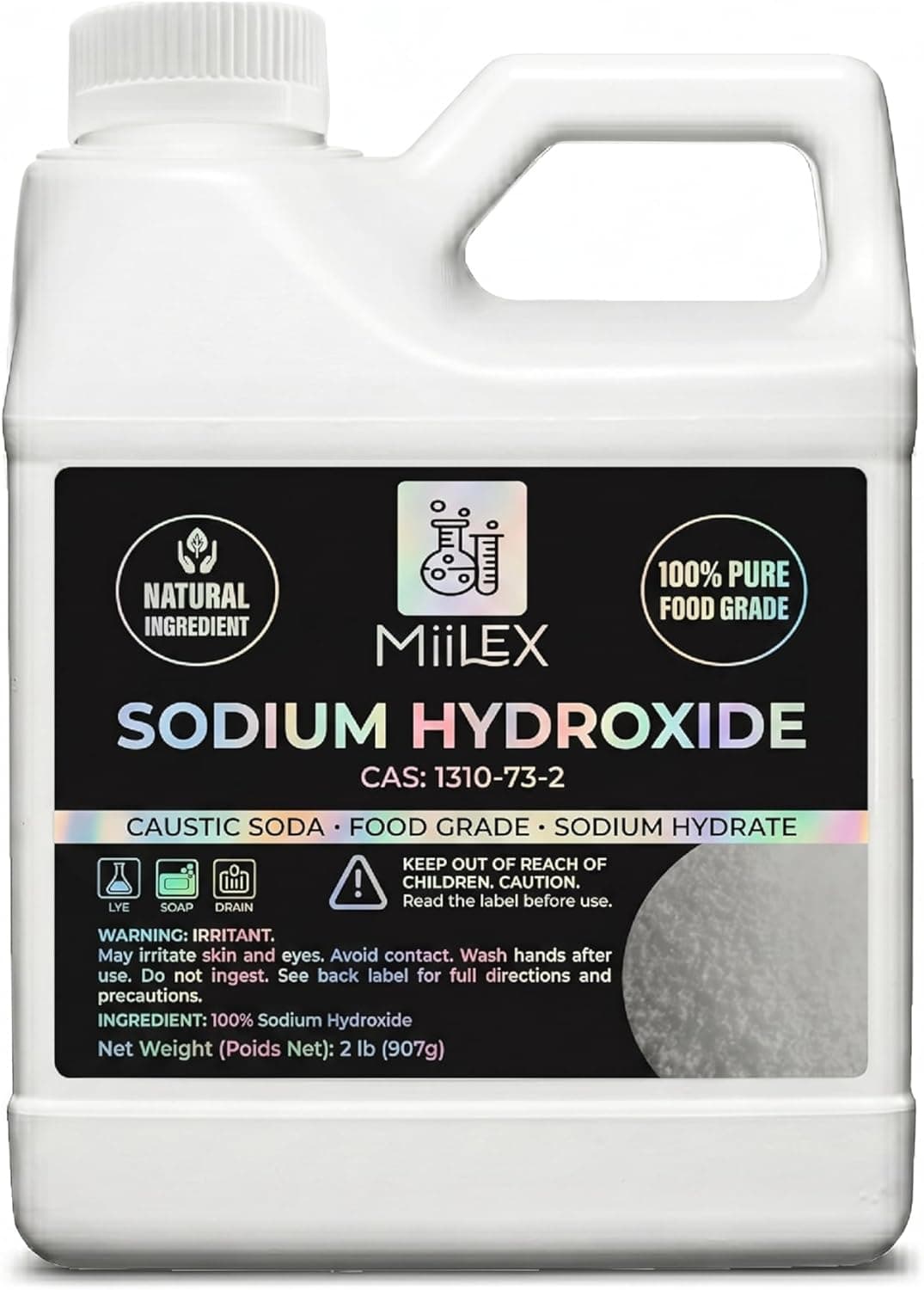
Miilex 2lbs kosher food grade sodium hydroxide, 100% pure caustic soda for cold process and liquid soap recipes.
Price range: See on Amazon
What we liked
- + 100% pure caustic soda labeling supports accurate lye calculations
- + Kosher and food grade claims suit makers with strict ingredient standards
- + 2lbs is a sensible supply for regular hobby soap making
Trade-offs
- - Less known than Boyer, so community feedback on it is thinner
- - Must be stored airtight and away from kids, pets and moisture
What this product is
This is a 2 pound, roughly 907 gram bag of sodium hydroxide, commonly called lye, sold by Miilex and described as 100 percent pure and food grade, meeting Food Chemicals Codex standards and produced in an ISO certified facility. The listing states the product is Kosher certified and suitable for multiple uses, including soap making, culinary applications like curing and pretzel crust preparation, and drain cleaning, with the packaging featuring a child resistant lid intended to reduce accidental exposure during storage. Buyers comparing lye brands should look closely at the exact percentage purity stated on the label and any accompanying certificate of analysis, since not every seller of food grade lye publishes the same level of documentation.
Why purity matters for soap makers
Cold process soap making depends on an accurate lye calculation, where the exact amount of sodium hydroxide is matched to the specific oils in a recipe using a lye calculator, so a product's purity claim directly affects how precisely that calculation will hold up in practice. A sodium hydroxide labeled as 100 percent pure and food grade, as this one is, gives makers more confidence that the weight they measure out corresponds closely to the actual reactive lye content, rather than being diluted with fillers or moisture that could throw off the finished bar's balance. A basic lye calculator, several of which are free to use online, remains the standard tool soap makers rely on regardless of which brand of sodium hydroxide they choose to weigh out.
Format and handling
Lye of this kind typically ships as micropearls or beads rather than flakes, which tends to dissolve more predictably in water and produces less airborne dust during measuring and mixing compared to some flake forms. Regardless of format, sodium hydroxide is a caustic material that requires standard safety precautions every time it is used, including gloves, eye protection, and adding lye to water rather than the reverse, along with storing the sealed container away from children, pets, and moisture, since exposure to humid air can degrade the product over time. A well-ventilated workspace and a dedicated set of measuring tools kept only for lye further reduce the chance of cross-contamination with other kitchen or craft supplies.
Brand recognition versus established names
Within the soap making community, a small number of lye brands, most notably The Boyer Corporation, have built a long track record and extensive user feedback over years of regular use. Miilex is a newer name to many soap makers by comparison, and while its stated certifications and food grade claims line up with what established brands offer, buyers who want the reassurance of years of community testing and forum discussion may lean toward a more established brand first, reserving a newer option like this for makers comfortable trying a less discussed supplier. Reading recent buyer feedback and any available lab documentation is a reasonable way to judge a newer lye brand's consistency before relying on it for a large batch.
Bottom line
This lye offers the core credentials cold process soap makers look for, food grade purity, Kosher certification, and manufacturing to Food Chemicals Codex standards, in a 2 pound size that suits regular hobby scale batches without the bulk commitment of a large industrial pack. It is a reasonable choice for makers who want to try a newer brand at a fair price point. Those who prioritize an established, heavily reviewed name in their lye supply may still want to compare it against longtime category leaders before switching over entirely. Makers who do try it should still weigh their lye carefully against a trusted calculator result rather than assuming purity based on labeling alone.
Frequently asked questions
Is this lye safe for cold process soap making?
Yes, it is described as food grade and 100 percent pure sodium hydroxide, which is the type used in cold process soap recipes.
What safety precautions does lye require?
Standard precautions apply: gloves and eye protection, adding lye to water rather than water to lye, and sealed storage away from children, pets, and moisture.
Does this lye come as flakes or beads?
It is sold as micropearls, a bead-like form that tends to dissolve predictably and produce less dust than some flake products.
How does this brand compare to established lye brands?
It carries the same food grade and Kosher claims as bigger names, but it has less community track record than long established suppliers like The Boyer Corporation.
Prices change often, so check the current price and availability on Amazon.
Check price on AmazonSoap Making Nest may earn a commission from the link above.