Mica Powder 50 Colors Set 5g Each Bag Natural Pigment for Soap Making, Candle Dye, Bath Bombs Review (2026)
Updated September 14, 2026 · Research-based review
Our verdict
This 50 color mica powder set suits soap makers who want a wide, ready to use palette for swirls and gradient designs across many small batches. The 5g bags cover a lot of testing at once, but the trade-off is that some shades can morph or fade in cold process lye soap and the many small bags need organized storage.
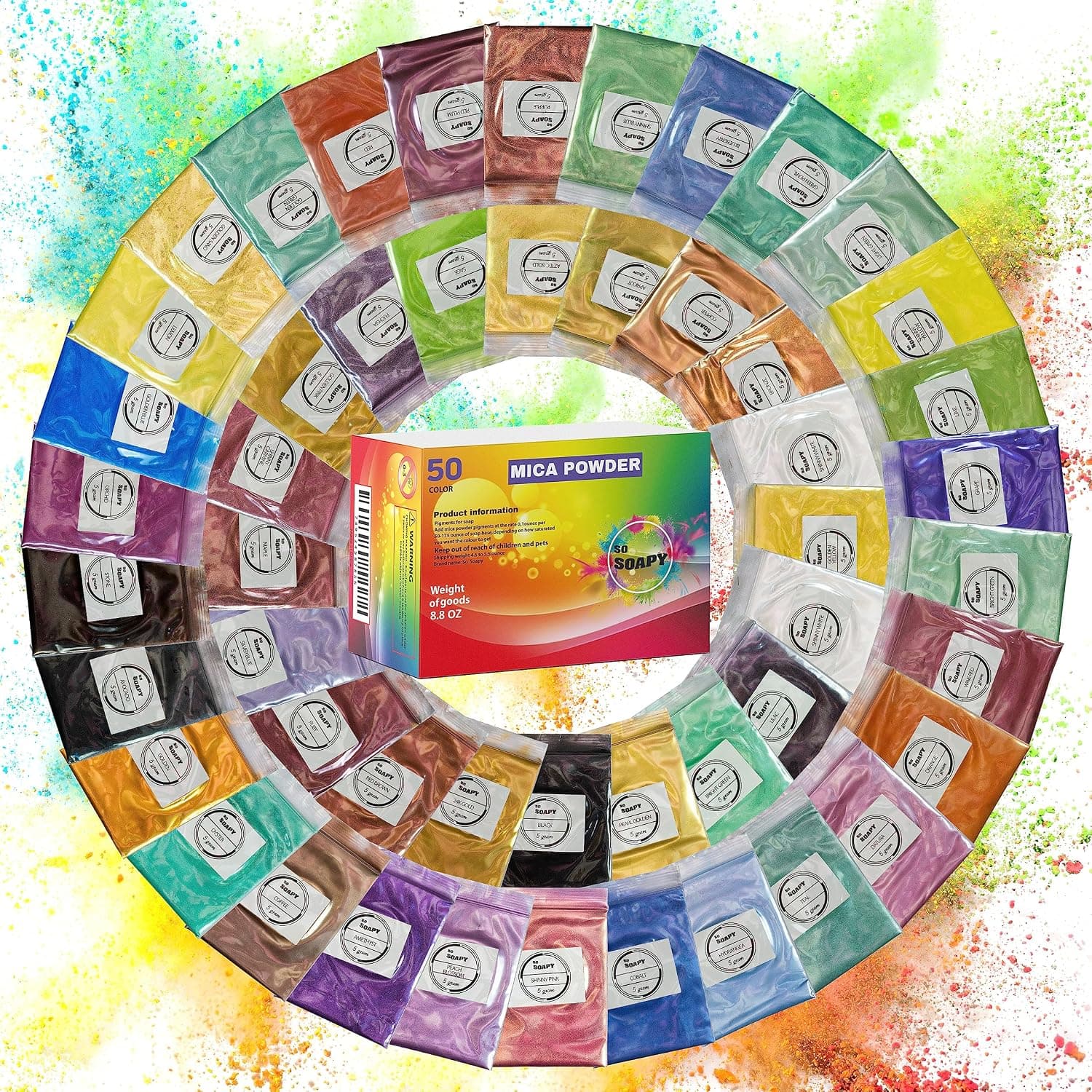
A 50 Colors mica powder set with 5g in each bag, for soap, candle dye and bath bombs.
Price range: See on Amazon
What we liked
- + 50 Colors give a huge palette for swirls and gradient designs
- + 5g each bag is enough to test every shade in several batches
- + Works in bath bombs and candles, so the set covers many crafts
Trade-offs
- - Some shades may morph or fade in cold process lye soap
- - Many small bags need a good storage system to stay organized
Who this mica set is for
With 50 individual colors at 5g each, this set is aimed at soap makers who want to experiment broadly, whether that means testing a new palette for a seasonal line or building up a color library for swirl and layered designs over time. The small bag size per color makes it practical to try a shade before committing a large batch to it, and because the same pigments are marketed for candles and bath bombs as well as soap, a maker who works across several handmade crafts gets more use out of one purchase. A soap maker who has already settled on a handful of go-to colors will get less value from 50 options than someone still developing their signature palette.
Cosmetic grade mica and how it performs
Mica powders like these are ground from natural mineral mica combined with pigment to create a non-toxic, cosmetic grade colorant with a fine, ultra fine particle size meant to disperse smoothly into oils, melt and pour bases or cold process batter. In practice, mica gives a consistent, often shimmery color that is easier to predict than a botanical or clay colorant, since manufacturers formulate it specifically for even, non-bleeding results in DIY crafts. The trade-off with mica in cold process soap specifically is that the alkaline saponification process can shift or mute some shades, a phenomenon soap makers call morphing, and it affects some colors in a mica line more than others regardless of brand.
Organizing and using 50 small bags
Fifty separate 5g bags require a real storage plan to stay useful, and most soap makers move them into a labeled bin, a spice rack style organizer or small jars so a specific shade can be found quickly during a time sensitive pour. Mica is typically dispersed into a small amount of light oil or rubbing alcohol before being added to batter or melted base, which helps prevent streaking and clumping, a step worth doing with any mica set rather than sprinkling powder directly into a pour. Because each bag is a modest 5g, heavy users of a favorite shade will run through that specific color faster than the rest of the set and may need to reorder just that pigment.
How it compares with smaller and natural alternatives
Against a 24 color mica set from brands like Techaroozor Rolio, this 50 color set offers roughly double the palette for testing purposes, though individual bag sizes and total pigment weight vary by seller and are worth checking before assuming more color equals more total product. Compared with natural, plant based colorants like indigo powder or a botanical sampler, mica gives brighter, more saturated and more predictable results across a wider color range, but it does not carry the same clean label or all natural marketing appeal that some soap buyers look for. Soap makers who sell to a natural products audience may want to pair a mica set like this with a smaller natural colorant option for buyers who ask.
Verdict and who should pick a smaller set
This 50 color mica set is a strong pick for a soap maker who wants to explore a wide range of shades without committing to full size jars of each one, as long as they are prepared to test for morphing in cold process recipes and keep the many small bags organized. It is more set than needed for someone who already knows their preferred handful of colors, where a smaller, more focused set or individual full size jars of favorites would be more economical. Buyers focused on natural or plant based marketing claims should treat this as a separate tool from, rather than a replacement for, botanical colorants like indigo or clay.
Frequently asked questions
Will all 50 mica colors stay true in cold process soap?
Some shades can shift or fade in cold process soap because of the alkaline saponification process, so it is worth testing a new color in a small batch before using it in a full recipe.
How much mica powder should I use per batch?
Soap makers typically start with a small amount, often around a teaspoon per pound of oils, and disperse it in a little oil or alcohol first to avoid clumping and streaking.
Is this mica powder safe for skin contact in soap?
It is sold as a non-toxic, cosmetic grade pigment intended for soap, bath bombs and similar body care crafts.
Can this mica set be used for candles and bath bombs too?
Yes, the same pigments are marketed for candle dyeing and bath bomb coloring in addition to soap making.
Prices change often, so check the current price and availability on Amazon.
Check price on AmazonSoap Making Nest may earn a commission from the link above.