Natural Botanical Colorants Sampler #2 for Soap Making - 18 Plant-Based Powders, Clays, and Herbs - Indigo, Madder Root, Annatto Review (2026)
Updated September 14, 2026 · Research-based review
Our verdict
A sampler of 18 plant-based powders, clays and herbs for makers who want to color soap naturally rather than with synthetic dyes or micas. It suits experimenting with earthy, botanical shades across several small batches, though the small amount of each ingredient may not stretch to full-size loaves.
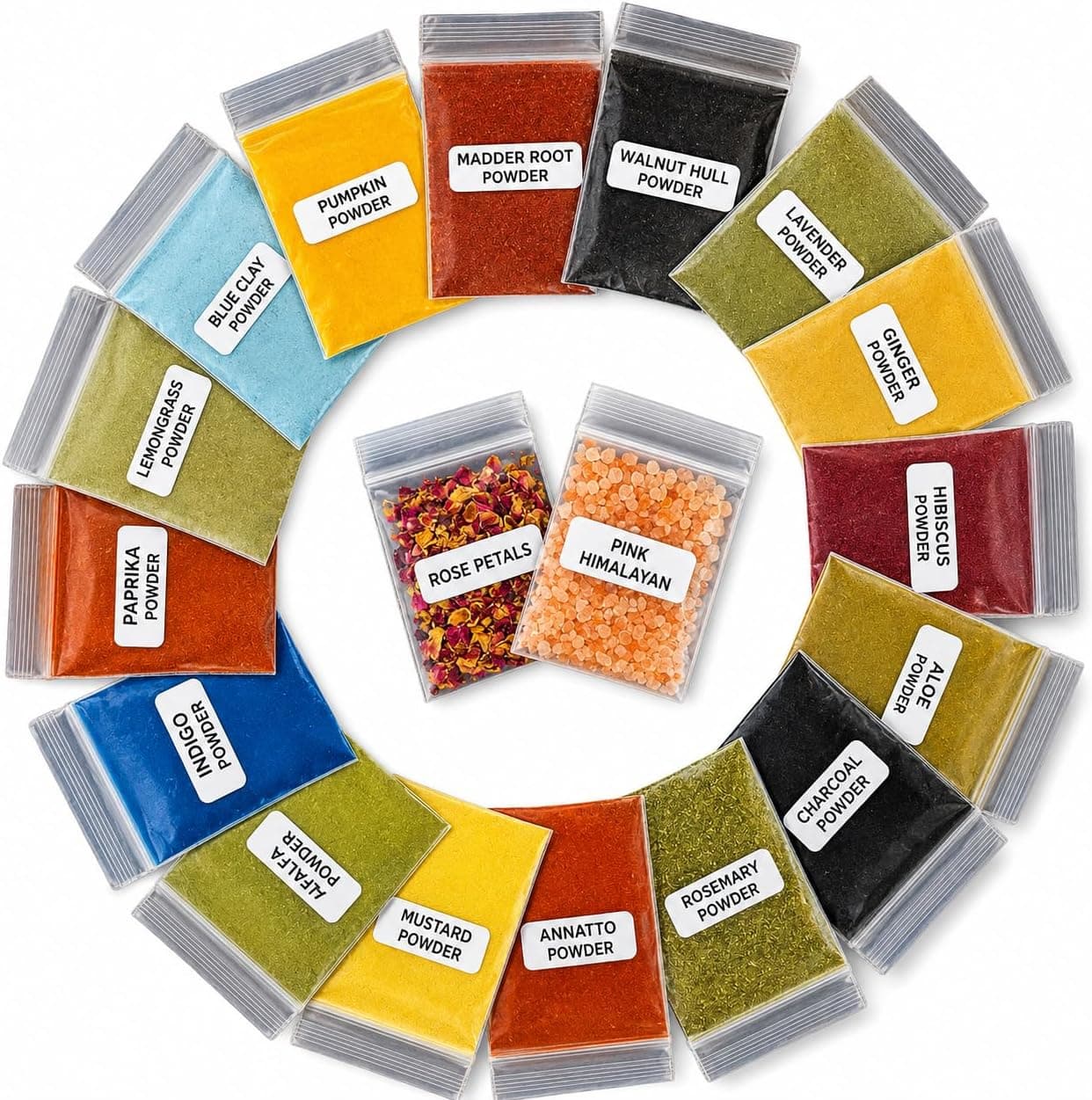
Natural Botanical Colorants Sampler #2 with 18 plant-based powders, clays and herbs including indigo and madder root.
Price range: See on Amazon
What we liked
- + 18 powders, clays and herbs give a wide range of natural shades
- + Includes indigo, madder root and annatto for blue, red and orange
- + Clays in the mix also add slip and a silky feel to bars
Trade-offs
- - Many small amounts may not be enough for full-size loaves
- - Natural colors vary by batch, so results are less predictable
Who this sampler is built for
This set targets soap makers, and according to the listing also cosmetics and textile crafters, who want to move away from synthetic dye and mica toward plant-based color. Listed ingredients include indigo, madder root, walnut hull, hibiscus, annatto and blue clay among the 18 items, giving a spread from blues and reds to browns and warm tones. It suits someone who wants to try several natural colorants at once to see which ones perform well in their recipe and cure time, rather than someone who already knows exactly which single botanical they want and would be better served buying that one ingredient in bulk.
What is in the sampler
The listing describes 18 plant-based powders, clays and herbs, naming indigo, madder root, walnut hull, hibiscus, annatto and blue clay specifically among the full set. Clays like the blue clay included here are valued in soap not only for color but for the slip and silky feel they can add to a bar, while botanical powders such as indigo and madder root are classic natural dye plants used for centuries in textiles as well as soap. Because this is a sampler rather than a single large bag of one ingredient, each powder or clay comes in a smaller portion sized for testing rather than for committing an entire recipe to one shade.
Getting consistent color from natural ingredients
Natural colorants behave differently from synthetic dye or mica because they are affected by the high pH of raw soap batter, and colors can shift during saponification and again as the bar cures over the following weeks. A shade that looks muted when first poured may deepen or change entirely by the time the bar is ready to use, so testing a botanical in a small batch first and letting it fully cure before judging the final color is worth the patience. Because natural ingredients vary batch to batch depending on harvest and processing, results are less exactly repeatable than a manufactured liquid dye, which is worth expecting going in rather than treating as a defect.
Trade-offs and how it compares
Against buying a single natural colorant like indigo powder on its own, this sampler trades depth in one shade for breadth across 18 options, which suits exploration but means less of any single color to work with per batch. Compared with a synthetic mica powder set offering 50 bright, consistent colors, this sampler gives up predictability and vividness in exchange for natural sourcing and the softer, earthier palette that clays and plant powders produce. A smaller 5oz natural colorant sampler from a similar style of seller offers fewer ingredients at a lower entry point for someone who wants to test the natural colorant idea before buying a wider set.
Verdict and who should choose differently
This sampler earns our score of 8.8 out of 10 as a well-rounded way to explore natural soap coloring across a genuinely wide range of plant powders and clays in one order. It fits makers building a natural or botanical product line who are willing to test and accept some batch to batch variation. Skip it if you need exactly repeatable color for a commercial line, want shimmer or opaque coverage that only mica delivers, or plan to color full-size loaves regularly, since the sampler sizes are better suited to testing than to sustained full-batch production.
Frequently asked questions
What natural ingredients are included in this sampler?
The listing names indigo, madder root, walnut hull, hibiscus, annatto and blue clay among the 18 plant-based powders, clays and herbs included.
Will natural colorants look the same in the bottle as in cured soap?
Not necessarily. Natural colorants can shift shade during saponification and again while the bar cures, so the color in cured soap often differs from the raw powder.
Is this sampler enough to color a full loaf of soap?
The sampler is sized for testing multiple ingredients rather than for large batches, so a full-size loaf may use up a portion faster than a single large bag of one colorant would.
Can these ingredients be used outside of soap making?
The listing also markets the sampler for cosmetics and textile dyeing in addition to soap making.
Prices change often, so check the current price and availability on Amazon.
Check price on AmazonSoap Making Nest may earn a commission from the link above.