Priority Chef Stainless Steel Mixing Bowls with Lids Set, Non-Slip Silicone Base Review (2026)
Updated September 14, 2026 · Research-based review
Our verdict
This Priority Chef stainless steel bowl set suits soap makers who want stable, lye safe containers that will not tip under a running stick blender. The non-slip silicone base and airtight lids are the main strengths, while the extra grater attachments and lids are parts most soap makers will not use for actual soap tasks.
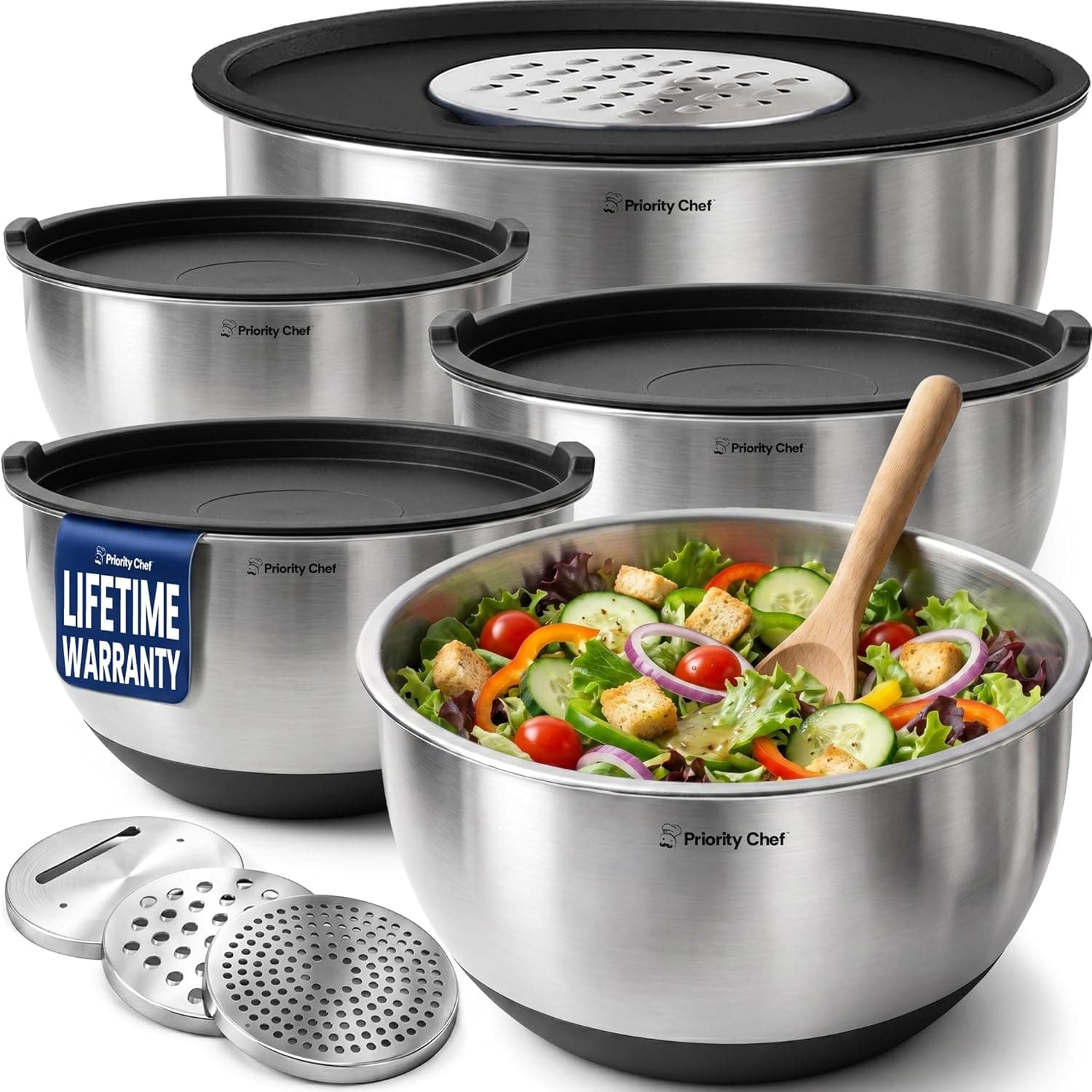
Priority Chef stainless steel mixing bowls with lids and a non-slip silicone base for steady soap mixing.
Price range: See on Amazon
What we liked
- + Non-slip silicone base keeps bowls still under a stick blender
- + Lids cover leftover oils or soap batter between steps
- + Stainless steel construction is safe for lye-based batter
Trade-offs
- - Silicone base must be kept away from high heat sources
- - Lids and bases add more parts to wash after soap sessions
Who these mixing bowls are for
Priority Chef sells this as a general kitchen mixing bowl set with graters and airtight lids, and soap makers pick it up mainly for the stainless steel bowls themselves, which stand up to lye and oils far better than plastic or glass alternatives that can scratch, cloud or crack over time. It suits a soap maker measuring out oils, mixing lye water or holding a portion of colored batter mid pour, where a bowl that will not slide across the counter during blending is genuinely useful. Buyers who only need one or two bowls for soap and have no interest in the grater attachments or food storage lids are paying for extra parts they may not use.
Why the non-slip base and stainless steel matter for soap
The set nests several bowls together, each sitting on a non-slip silicone base that keeps it planted on the counter while a stick blender runs at speed, which matters because a wobbling bowl during the trace stage of cold process soap is both messy and a spill risk with caustic batter. Stainless steel is a safe material to bring into contact with lye and lye water, unlike aluminum which reacts with sodium hydroxide, so soap makers can use these bowls for the caustic stage of a recipe as well as for measuring oils, without worrying about the metal degrading or contaminating the batch.
Using the bowls, lids and extra attachments
The airtight lids that come with this set are built with food storage in mind, sealing in freshness for leftovers, and soap makers mainly find them useful for covering a bowl of measured oils or fragrance between steps of a longer recipe rather than for anything involving lye, which should never be stored in a sealed container due to pressure buildup risk. The grater attachments included in the set are aimed at food prep tasks like grating cheese or slicing vegetables directly into a bowl, and most soap makers will simply set these aside since they have no role in a soap recipe, though they are a bonus for anyone who also cooks with the same bowls.
How it compares with other soap making bowl sets
Against simpler nesting stainless bowl sets without lids, like basic OXO or FineDine sets, this Priority Chef set costs more for the added lids and graters, features a soap maker gets little direct use from. Compared with sets like Umite Chef's 8 piece stainless bowls with airtight lids, the core value proposition is similar: stable, lye safe stainless bowls with a non-slip base, and the choice between them often comes down to bowl count and size range rather than any feature specific to soap making. None of these general kitchen sets are marketed for soap use specifically, so soap makers are adapting a cooking product either way.
Verdict and who should choose a simpler set
This bowl set works well for soap makers who want sturdy, lye compatible stainless bowls that stay put during blending, and the lids are a genuine bonus for storing measured ingredients mid recipe even if the graters go unused. It is not the most efficient purchase for someone who only wants bowls dedicated to soap, since a simpler nesting stainless set without lids or graters would cost less for the same core stability and material safety. Soap makers on a tight budget may prefer to buy plain stainless mixing bowls separately rather than pay for attachments built for general cooking tasks.
Frequently asked questions
Is stainless steel safe to use with lye when soap making?
Yes, stainless steel resists the caustic reaction that lye has with metals like aluminum, making these bowls a safe material choice for mixing lye water and oils.
Can I store mixed lye water in the airtight lids that come with this set?
No, lye water should not be sealed in an airtight container because it can build up pressure, the lids are best used for storing measured oils or other non-caustic ingredients.
Will the non-slip base keep the bowl still while using a stick blender?
The silicone base is designed to grip the counter and keep the bowl from sliding while blending, which helps control splatter and spills with soap batter.
Do I need the grater attachments for soap making?
No, the graters are intended for general food prep like cheese or vegetables and have no use in a soap recipe.
Prices change often, so check the current price and availability on Amazon.
Check price on AmazonSoap Making Nest may earn a commission from the link above.