Pifito Soap Making Oils Mix No. 2, 60 Oz Pre-Measured Oils for Cold Process Soap Making Review (2026)
Updated September 14, 2026 · Research-based review
Our verdict
A ready-weighed 60 ounce oil blend that saves a beginner from sourcing and measuring five separate carrier oils for a cold process batch. It removes recipe guesswork, but it also removes the ability to adjust the ratio, so makers who want to fine-tune hardness or lather need a fully custom recipe instead.
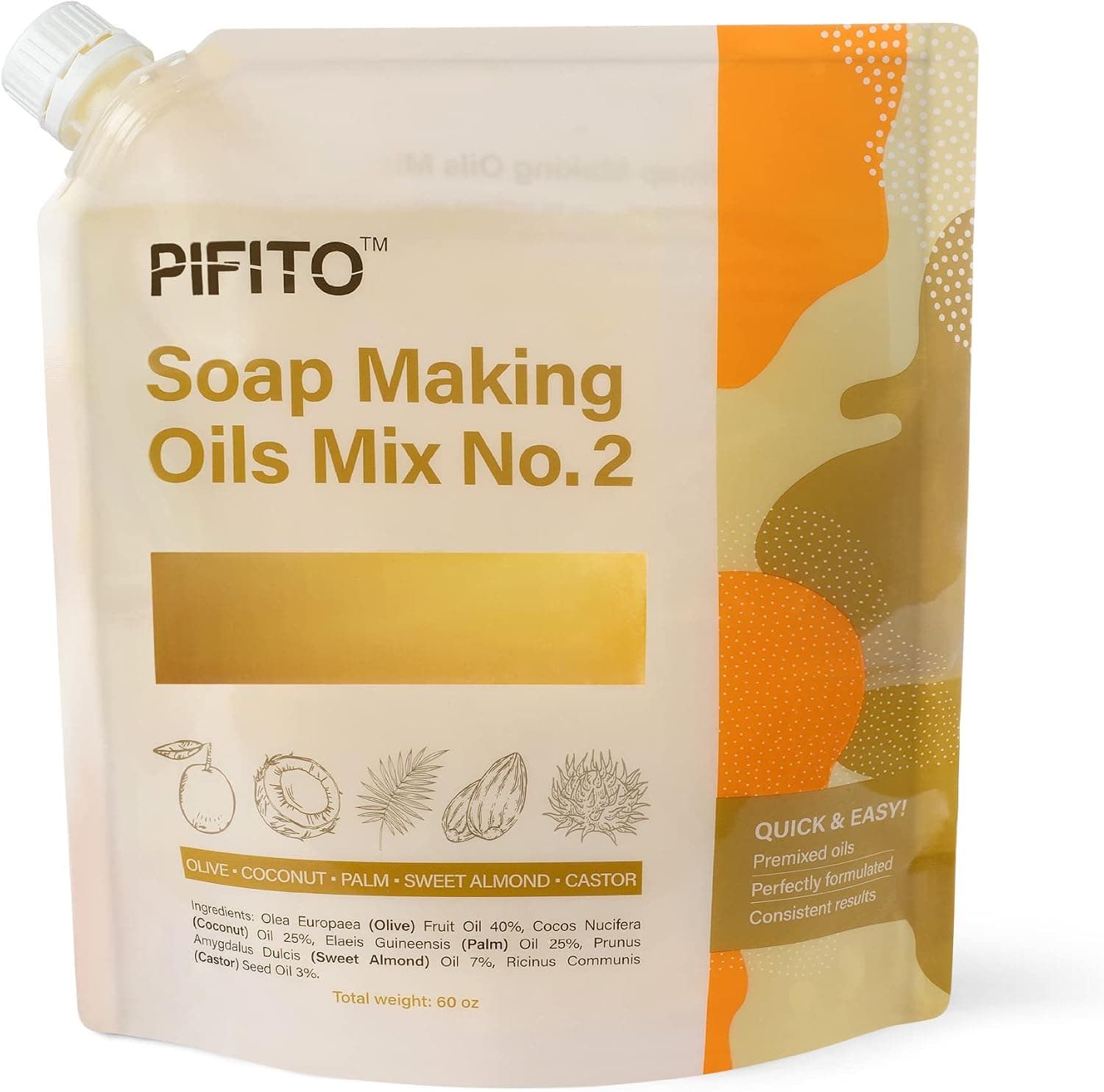
Pifito Soap Making Oils Mix No. 2, 60 Oz of pre-measured oils, a shortcut blend for cold process beginners.
Price range: See on Amazon
What we liked
- + Pre-measured blend removes the need to buy and weigh several oils
- + 60 Oz mix is ready for a full batch with a matching lye amount
- + Mix No. 2 gives an alternate recipe profile to compare against No. 1
Trade-offs
- - Blend includes palm and coconut oil, so it is not a pure olive oil soap
- - You cannot tweak the oil ratios once the blend is premixed
Who this pre-measured blend is for
This mix is built for someone starting cold process soap who does not yet want to buy five different oils in bulk and weigh out a recipe from scratch. Because the whole 60 ounces arrives in one pouch with the oil ratio already fixed, it works well for a first few batches while a maker is still learning how lye, water, and superfat interact, without also juggling separate bottles of olive, coconut, palm, almond, and castor oil. It also suits someone who wants a dependable base recipe to compare against a second custom blend, using Mix No. 2 as the control batch. Experienced soapers who already dial in their own oil percentages will get less value from a fixed blend than from buying oils individually.
What is actually in the pouch
According to the maker's own product listing, Mix No. 2 is 40 percent olive oil, 25 percent coconut oil, 25 percent palm oil, 7 percent sweet almond oil, and 3 percent castor oil, totaling 60 ounces with no lye included. The palm oil is described as sustainably sourced and RSPO certified. The oils are sold as cosmetic grade and are described as tested for purity, with the blend arriving in a pouch the maker states is microwave safe, so solid oils like coconut and palm can be melted directly in the microwave or in a double boiler before mixing. A soap calculator is still needed to convert the 60 ounces of oil weight into the matching water and lye amounts for a cold process batch.
Turning the mix into a finished bar
Once the oils are melted and combined, the workflow is the same as any cold process recipe: run the total oil weight and each oil's percentage through a soap calculator to get the lye and water amounts, mix the lye solution, combine it with the melted oils, and bring the batch to trace before adding fragrance or colorant. Because the ratio is fixed, a maker cannot lower the palm percentage or raise the olive share mid-recipe, so any adjustment has to happen after trace, through additives rather than the oil blend itself. The 60 ounce size is proportioned to fill a standard home loaf mold in a single pour, which keeps the math simple for a first attempt.
How it compares with buying oils separately
Against straight olive oil options like Essential Depot's food grade pomace olive oil sold in one and two gallon jugs, this blend trades flexibility for convenience. A gallon of plain olive oil lets a maker build a high-olive Castile-style bar or blend it at any ratio they choose, and those pomace jugs rank higher in the site's own olive oil comparison. What this pre-measured mix offers instead is a tested recipe with no separate purchases or weighing, plus a sibling Mix No. 1 sold by the same maker for comparing two different oil profiles side by side. For a soap maker who values control over convenience, buying the oils individually remains the better route.
Verdict and who should buy oils separately instead
This blend earns its place as a low-friction way to get a cold process batch going without sourcing several oils and weighing out percentages by hand. The trade-off is real: once mixed, the ratio cannot be changed, so a maker who wants more olive oil for a gentler bar, less palm oil, or a different superfat approach needs to buy carrier oils separately and build a custom recipe. Beginners running their first few batches, or anyone who wants a dependable base recipe to test fragrance and color against, are the best fit. Soap makers chasing a specific oil ratio or avoiding palm oil entirely should skip this mix and shop individual oils instead.
Frequently asked questions
Does this mix include lye?
No, the pouch contains only the carrier oil blend. A separate lye purchase and a soap calculator are needed to work out the correct lye and water amounts for the 60 ounces of oil.
What is the exact oil ratio in Mix No. 2?
According to the maker's listing it is 40 percent olive oil, 25 percent coconut oil, 25 percent palm oil, 7 percent sweet almond oil, and 3 percent castor oil.
How is the solid oil in the pouch melted?
The pouch is described by the maker as microwave safe, so it can be warmed in short bursts in the microwave or set in a double boiler until the oils are fully liquid before mixing.
How is this different from Mix No. 1?
Mix No. 1 is a separate blend from the same maker with a different oil ratio, sold so makers can compare two finished recipes rather than adjusting one mix themselves.
Prices change often, so check the current price and availability on Amazon.
Check price on AmazonSoap Making Nest may earn a commission from the link above.