Silicone Soap Mold - Flexible Rectangular Loaf Mold with Wood Box and Wooden Cover 2500ml 4.5-5lb Review (2026)
Updated September 14, 2026 · Research-based review
Our verdict
A 2500ml silicone loaf liner in a solid wood box that holds a 4.5 to 5 pound batch, aimed at makers who pour bigger loaves than a standard 42 ounce mold allows. The wooden cover helps even out gel phase and the silicone peels away cleanly, but a batch this large needs a full-size recipe to fill it.
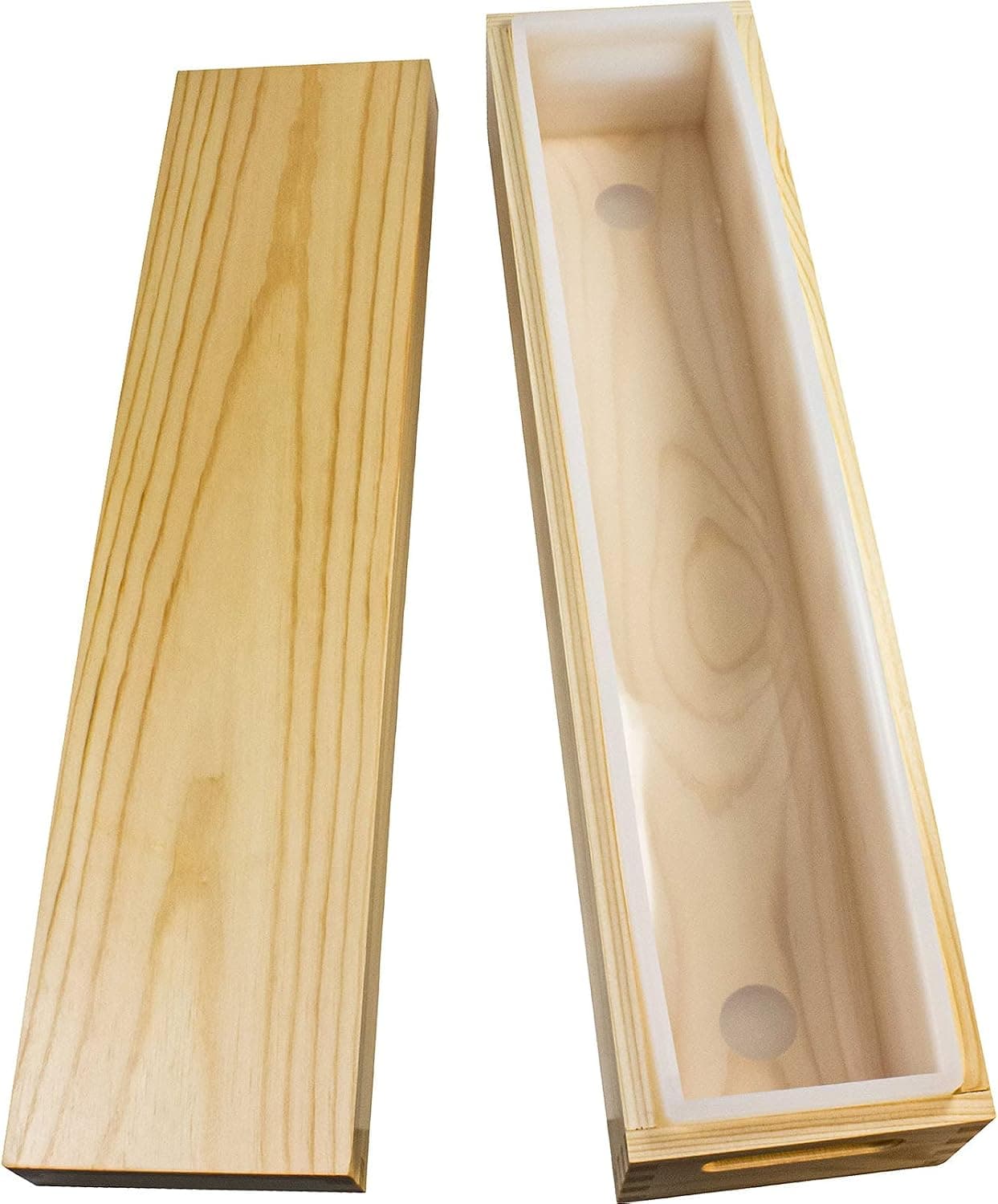
A 2500ml silicone loaf mold with wood box and wooden cover, holding a 4.5-5lb batch for larger loaves.
Price range: See on Amazon
What we liked
- + 4.5-5lb capacity suits makers who pour bigger cold process batches
- + Wooden cover helps insulate the loaf and encourages even gel phase
- + Silicone liner releases the loaf cleanly without parchment paper
Trade-offs
- - Larger loaf needs a full-size recipe, so small tests will not fill it
- - Wood finish and liner fit can vary between batches, so inspect on arrival
Who should size up to this mold
This mold fits a soap maker who has outgrown a standard 42 ounce loaf mold and wants to pour larger batches without doubling up on smaller molds. Because the finished loaf holds roughly 4.5 to 5 pounds of soap, it works well for someone selling at markets or filling gift orders who needs more bars per pour, and for anyone who prefers fewer, larger batches over frequent small ones. It is not the right choice for a beginner still testing recipes in small quantities, since a partially filled 2500ml mold will not set with the same even shape as a full pour. Makers who like planning a soap top with piped or textured decoration also benefit from the extra headroom the wooden lid provides.
What is in the box and how it is built
The set pairs a food grade silicone liner with a solid wood outer box and a matching wooden cover, with the wood sized at roughly 18 by 4.3 by 4 inches and the finished soap loaf coming out around 16.7 by 3 by 2.6 inches. The silicone is described by the maker as phthalate and BPA free, with a glossy finish meant to release the loaf cleanly without parchment paper, and the box includes cut handles and holes to help lift the liner out once the soap has set. The manufacturer lists a heat resistance range of about minus 40 to plus 230 degrees Celsius for the silicone itself, which covers both cold process and melt and pour temperatures.
Pouring and unmolding a full batch
The silicone liner sits inside the wood box for support during the pour, since the flexible material alone would not hold a straight-sided loaf this large without the frame around it. The wooden cover then sits on top, which helps trap heat during gel phase so the center of a big cold process loaf gels evenly rather than partially, and it also protects a decorated top from dust while curing. Once the soap has fully set, the silicone peels back from the sides on its own, and the loaf lifts out through the top or is pushed up from the box handles built into the wood. Because the batch is large, plan on a longer cure time than a standard 42 ounce loaf before cutting.
How it compares with smaller loaf molds
Against a standard 42 ounce silicone and wood mold, such as the DD-life loaf mold that ranks ahead of it in the site's own mold liner guide, this 2500ml set trades a smaller, easier-to-fill footprint for roughly double the batch size. The DD-life mold and similar 42 ounce options suit a maker testing a new recipe or working with fragrance oils in small trial batches, while this larger mold rewards someone with a recipe they already trust and want to scale up. Because it is sold without a named brand behind the wood finish, fit and joinery on the box can vary more than a mold from a maker with a longer track record.
Verdict and who should choose a smaller mold
For a soap maker ready to pour bigger batches, this mold delivers real capacity, a wooden cover that helps gel phase, and silicone that releases cleanly without extra lining. The trade-off is scale: a 2500ml mold needs a full 4.5 to 5 pound recipe to fill properly, so it is the wrong pick for testing new formulas or working in small quantities. Sellers and hobbyists with an established recipe who want fewer, larger pours are the best match. Anyone still dialing in fragrance amounts, colors, or additive rates should stick with a smaller 42 ounce loaf mold until the recipe is locked in.
Frequently asked questions
How much soap does this mold hold?
The listing states a capacity of about 4.5 to 5 pounds, or roughly 60 to 78 ounces depending on the recipe's density.
Does the silicone liner need a wood box to work?
The wood box supports the flexible silicone during the pour so the loaf keeps straight sides, and it also holds the wooden cover in place over the top while the soap gels.
Can this mold be used for melt and pour as well as cold process?
Yes, the manufacturer lists a heat resistance range of about minus 40 to plus 230 degrees Celsius for the silicone, which covers both cold process and melt and pour temperatures.
Is this a better choice than a standard 42 ounce loaf mold?
It depends on batch size. A 42 ounce mold suits smaller or trial batches, while this 2500ml mold is built for makers who already pour larger, full-size batches on a regular basis.
Prices change often, so check the current price and availability on Amazon.
Check price on AmazonSoap Making Nest may earn a commission from the link above.