Soapeauty Sweet Almond Oil Cold Pressed Refined USDA Organic 32 fl oz Review (2026)
Updated September 14, 2026 · Research-based review
Our verdict
A gentle, pale conditioning oil that suits soap makers building mild, skin-loving recipes rather than a lone base oil for a whole batch. The 32 fl oz USDA organic bottle is a fair mid-size buy, but almond's softness means balancing it with harder oils, and it is not a fit for anyone with a nut allergy in the household.
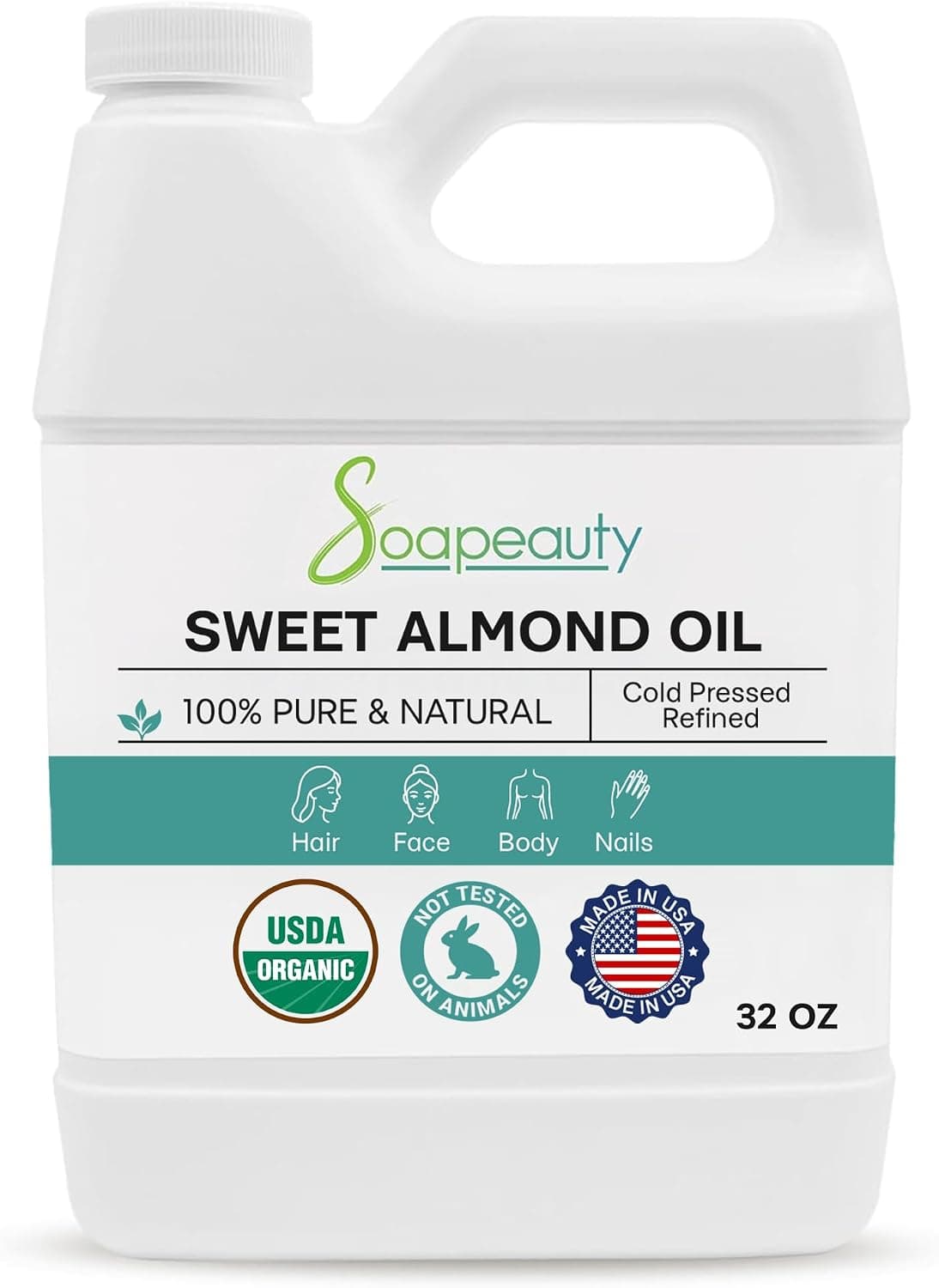
Soapeauty 32 fl oz USDA organic cold pressed refined sweet almond oil for gentle, conditioning soap recipes.
Price range: See on Amazon
What we liked
- + USDA organic sweet almond oil suits natural soap and skincare lines
- + Refined oil is light in color and scent, so bars stay pale
- + 32 fl oz is a generous size for regular almond oil recipes
Trade-offs
- - Almond oil adds softness, so recipes need harder oils for balance
- - Nut-based oil is a concern for customers with nut allergies
Who this almond oil suits
Soapeauty's Sweet Almond Oil is sold as USDA organic, cold pressed and refined, with a country of origin listed as the USA, in a 32 fl oz bottle aimed at soap makers, massage oil blenders and skincare formulators. It suits soap makers who want to add a conditioning, moisturizing oil to a cold process recipe alongside harder oils, since sweet almond oil is prized for the soft, silky feel it lends to finished bars rather than for cleansing power or lather. Buyers building an organic or clean-label soap line will value the USDA certification here, since it is a meaningful marketing and sourcing distinction over a conventional almond oil. It is not suited to any household with tree nut allergies, since almond oil is derived from a nut.
What is in the bottle
Botanically this is Prunus dulcis oil, refined and described as pale yellow to light golden in color, cold pressed and carrying USDA organic certification with a US origin. Refined almond oil is lighter in color and scent than an unrefined version, which matters in soap making because a lighter oil is less likely to tint a bar's final color or carry a strong nutty aroma that competes with added fragrance. The oil is rich in vitamin E and omega fatty acids, properties that carry over into finished soap as a softer, more conditioning bar rather than contributing hardness or a big lather boost. Because almond oil is a soft oil, most cold process recipes use it as one ingredient among several rather than as a primary base, generally kept to a moderate percentage alongside harder oils like coconut or palm alternatives.
Living with it day to day
Almond oil pours more easily than a thick oil like castor, making it simple to measure out for regular batches, and its light color means it will not noticeably shift the hue of a finished bar the way a darker or unrefined oil might. Store the bottle capped in a cool, dark spot, since almond oil, like most carrier oils, can gradually oxidize with prolonged heat or light exposure, shortening its useful shelf life. A 32 fl oz bottle is a reasonable mid-size buy for a soap maker who uses almond oil regularly but does not want the commitment of a gallon jug, and it should be used within a reasonable window rather than stored indefinitely once opened. Keep it away from anyone in the household with a nut allergy, and label the bottle clearly in a shared workspace.
Trade-offs and how it compares
Against Traverse Bay Sweet Almond Oil sold in a 7 lb gallon size, this 32 fl oz bottle suits a soap maker not yet ready to commit to bulk buying, while the gallon rewards high-volume makers with a better price per ounce over time. Compared with Pifito Sweet Almond Oil at 16 oz, this listing offers double the volume at a similar quality tier, useful once a maker has settled on how much almond oil their recipes need. Against an unrefined organic almond oil, this refined version trades a touch of natural character and a slightly deeper nutty note for a lighter color and milder scent, which suits makers who want almond's conditioning benefit without it overpowering a fragrance blend.
Verdict and who should pick something else
For a soap maker building conditioning, organic-leaning cold process recipes who wants a reasonably sized bottle without committing to bulk, this almond oil is a solid, well-sourced pick and our score of 8.4/10 reflects good everyday value. High-volume soap businesses going through almond oil quickly should compare cost per ounce against the gallon size instead, since 32 fl oz increments cost more at scale. Anyone formulating for customers with nut allergies should skip almond oil entirely and choose a nut-free carrier oil such as sunflower or grapeseed, since almond oil carries a real allergen risk regardless of how it is processed.
Frequently asked questions
What does sweet almond oil add to a soap recipe?
It contributes a soft, conditioning feel to the finished bar rather than lather or hardness, so it is usually combined with harder oils rather than used alone.
Is this almond oil safe for people with nut allergies?
No, sweet almond oil is derived from a nut and should be avoided by anyone making or using soap for someone with a tree nut allergy.
Does refined almond oil affect soap color or scent?
Refined almond oil is light in color and mild in scent, so it is less likely to tint a bar or clash with added fragrance than an unrefined, darker almond oil.
How much almond oil should go into a cold process recipe?
It is typically used as one ingredient among several at a moderate percentage, balanced with harder oils, rather than as the main base oil in a batch.
Prices change often, so check the current price and availability on Amazon.
Check price on AmazonSoap Making Nest may earn a commission from the link above.