Essential Depot Palm Oil RSPO Certified Sustainable Food Grade 7 lbs 1 Gallon Pail Review (2026)
Updated September 14, 2026 · Research-based review
Our verdict
An RSPO certified palm oil sold in a 7 lb pail, aimed at soap makers who want a hard, long-lasting bar without giving up on sustainable sourcing. It is solid at room temperature and needs melting before use, and some buyers avoid palm oil on principle regardless of certification.
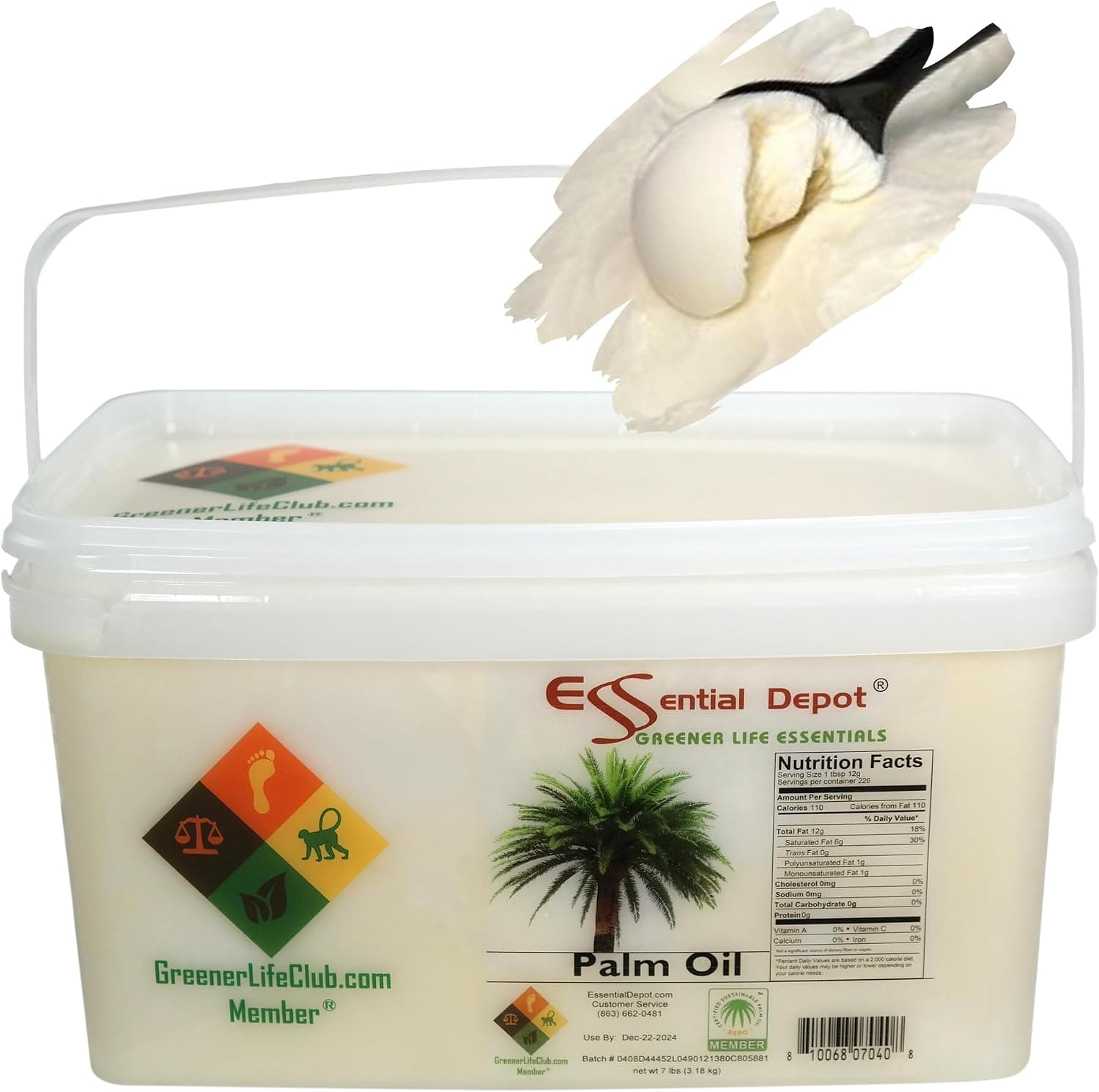
Essential Depot RSPO certified sustainable food grade palm oil, 7 lbs in a 1 Gallon Pail, for hard, long-lasting bars.
Price range: See on Amazon
What we liked
- + RSPO certification helps address palm oil sourcing concerns
- + Palm oil adds hardness and a stable lather to cold process soap
- + 7 lbs pail supplies plenty of palm for regular recipe use
Trade-offs
- - Some customers avoid palm oil regardless of sustainable certification
- - Solid oil needs full melting and stirring before measuring
Who should consider this palm oil
This Essential Depot pail suits soap makers who rely on palm oil for hardness and lather stability but want to be able to point to RSPO certification when customers ask about sourcing. It fits a maker running a regular production schedule, since 7 lbs covers a meaningful number of batches without demanding gallon-scale storage. Makers who have already decided to avoid palm oil entirely, whether for personal, environmental or customer-facing reasons, will not be swayed by certification alone and should look at alternative hardening oils instead, since RSPO addresses sourcing practices rather than removing palm oil from a formula.
What RSPO certified and food grade mean here
The product is sold as RSPO certified, meaning it meets Roundtable on Sustainable Palm Oil standards for how the palm was grown and processed, and it is labeled food grade and not hydrogenated. It ships in a resealable HDPE pail with a removable handle, sized to hold 7 lbs of oil, roughly a gallon by volume. Palm oil's fatty acid makeup, mostly palmitic, oleic and linoleic acid, is what gives soap its hardness and stable lather when palm is part of the oil blend, and the RSPO label lets a maker document sourcing on packaging or a website without switching to a different hardening oil.
Working with solid oil
Palm oil is solid at normal room temperature and can arrive firm depending on the season, so plan on melting the full pail contents, or the portion you need, before measuring it by weight for a lye calculator. Because palm oil reacts and pulls other oils into saponification quickly once combined with lye, batches with a meaningful palm percentage can thicken faster than an all soft-oil recipe, so it helps to have molds and any additives ready before combining oils and lye. Once cured, bars with palm oil in the blend tend to hold their shape and resist melting away quickly in a wet soap dish.
Trade-offs and alternatives
Compared with Essential Depot's kosher, not hydrogenated palm oil in a similar size, this listing emphasizes RSPO sustainability messaging as its main differentiator. Against smaller 14 fl oz palm oil bottles from other sellers, this 7 lb pail is far more economical for anyone using palm oil regularly, though it is a bigger commitment for someone just testing a recipe. Some soap makers substitute palm kernel oil, tallow or a vegetable palm-free blend specifically to sidestep palm oil sourcing debates entirely, which is worth considering if your customer base has strong feelings about palm oil regardless of certification. Palm kernel oil in particular behaves differently in a recipe than whole palm oil, so it is not always a drop-in substitute at the same percentage.
Verdict and who should look elsewhere
This pail is a sensible pick for a maker who wants palm oil's hardness and lather benefits along with a documented sustainability certification, earning our score of 8.9 out of 10 for fit to the job and value. Skip it if you have already committed to a palm-free product line, since no amount of certification will satisfy a customer base that wants palm oil left out of the ingredient list entirely, and look instead at palm kernel, tallow or another hardening oil. For everyone else building a standard cold process line, this pail is an easy way to add documented sustainable sourcing without reformulating a recipe that already relies on palm oil.
Frequently asked questions
What does RSPO certified mean for this palm oil?
RSPO certification means the palm oil meets Roundtable on Sustainable Palm Oil standards for how it was grown and processed, which helps address common sourcing concerns.
Is this palm oil solid or liquid?
It is solid at normal room temperature and needs to be melted before it can be measured accurately for a soap recipe.
How much palm oil should go into a soap recipe?
Amounts vary by recipe, and a lye calculator should be used to set the exact percentage, since palm oil reacts quickly once combined with lye.
Is this oil food grade?
Yes, the listing describes it as food grade and not hydrogenated.
Prices change often, so check the current price and availability on Amazon.
Check price on AmazonSoap Making Nest may earn a commission from the link above.