Soapeauty Cold Pressed Castor Oil 100% Pure USP Grade Hexane Free 32 fl oz Review (2026)
Updated September 14, 2026 · Research-based review
Our verdict
A reliable castor oil for soap makers who want the lather-boosting, humectant qualities castor brings to a cold process recipe without solvent extraction. The 32 fl oz size fits regular soapers well, though the oil's thick, clingy texture wastes a bit of product at the bottom of the bottle.
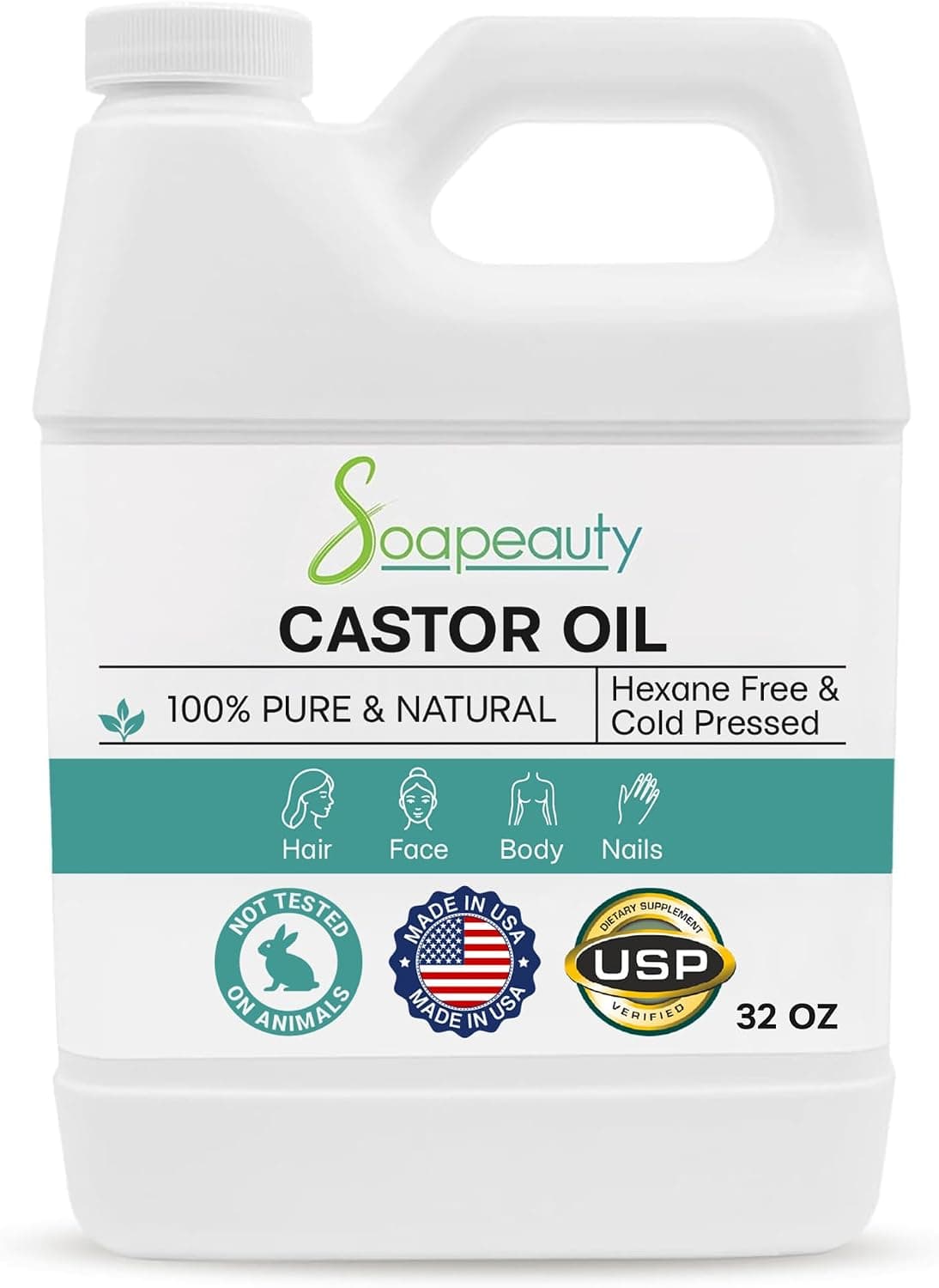
Soapeauty 32 fl oz cold pressed 100% pure USP grade hexane free castor oil for soap and skincare makers.
Price range: See on Amazon
What we liked
- + Hexane free USP grade castor suits makers avoiding solvent extraction
- + Cold pressed oil appeals to natural soap and skincare brands
- + 32 fl oz bottle balances supply with easy handling
Trade-offs
- - Thick oil clings to bottle walls, so some is wasted without a spatula
- - Premium processing claims raise cost over basic castor oil
Who this castor oil suits
Soapeauty markets this as a cold pressed, USP grade, hexane free castor oil sourced from India, positioning it for soap makers and skincare formulators who want an oil processed without solvent extraction. It suits cold process soap makers specifically because castor oil is prized in small percentages for boosting a stable, bubbly lather, typically used at around 5 percent or less of total oils in a recipe rather than as a primary base oil. The hexane free claim matters most to makers marketing their soap as naturally processed or avoiding solvent residues, so buyers focused purely on price with no preference around extraction method may find a standard castor oil at a lower cost meets their needs just as well.
What is actually in the bottle
This is Ricinus Communis oil, cold pressed and unrefined, with a clear to pale yellow color and a country of origin listed as India, sold in a 32 fl oz bottle. Cold pressing without hexane preserves more of the oil's natural ricinoleic acid content compared with solvent extracted alternatives, and ricinoleic acid is the fatty acid responsible for castor oil's distinctive humectant and lather-enhancing properties in soap. The oil also carries omega-6 and omega-9 fatty acids and vitamin E, which is why it shows up in skincare and hair formulations beyond soap making, including as a treatment marketed for eyebrows and eyelashes. USP grade signals a pharmaceutical-level purity standard, which is a meaningful quality marker for an oil going into products applied to skin.
Living with it day to day
Castor oil is noticeably thicker and more viscous than oils like sweet almond or sunflower, so it pours slowly and clings to the inside of the bottle, meaning a small amount is effectively unusable without scraping or using a spatula to get the last bit out. Store the bottle tightly capped in a cool, dark spot away from direct sunlight, since exposure to heat and light can gradually degrade oil quality over time. Because castor oil is typically used in small percentages of a soap recipe, a 32 fl oz bottle lasts a regular soap maker through many batches, so slow use is expected and not a sign the product has gone bad. Give the bottle a light shake before measuring, since any settling can make the first pour slightly inconsistent.
Trade-offs and how it compares
Against Traverse Bay Castor Oil sold in a 7 lb gallon size, this 32 fl oz Soapeauty bottle suits a soap maker who wants a smaller commitment or is still dialing in their recipe's castor percentage, while the gallon size rewards high-volume makers with a better cost per ounce. Compared with Pifito Castor Oil at 16 oz, this listing offers double the volume for makers who go through castor oil faster once they settle into a recipe. Against a basic Castor Oil USP 32 oz jug without the hexane free or cold pressed claims, this Soapeauty version costs a bit more for the extraction method, which matters primarily to buyers marketing their soap on clean processing rather than to anyone shopping purely on price.
Verdict and who should pick something else
For a cold process soap maker who wants a cold pressed, hexane free castor oil in a workable mid-size bottle, this is a solid, well-sourced option and our score of 8.4/10 reflects good but not top-tier value against bulk alternatives. High-volume soap businesses that go through castor oil quickly should compare cost per ounce against a gallon size instead, since buying in 32 fl oz increments adds up faster at scale. Buyers who do not care about extraction method and simply want the cheapest USP grade castor oil available should shop on price alone, since the cold pressed, hexane free distinction here is a processing detail rather than a functional difference in the finished soap.
Frequently asked questions
How much castor oil should go into a soap recipe?
Most cold process soap makers use castor oil at around 5 percent or less of total oils, since it is prized for boosting lather rather than serving as a primary base oil.
Why does castor oil feel thicker than other soap making oils?
Castor oil is naturally more viscous than oils like almond or sunflower, which is why it clings to bottle walls and pours more slowly.
Does hexane free processing change how the oil performs in soap?
It mainly affects how the oil is marketed and how much natural content is preserved during extraction, not the basic lather-boosting role castor oil plays in a recipe.
How should castor oil be stored to keep it fresh?
Keep the bottle tightly capped in a cool, dark place away from direct sunlight, since heat and light exposure can gradually reduce oil quality over time.
Prices change often, so check the current price and availability on Amazon.
Check price on AmazonSoap Making Nest may earn a commission from the link above.