SP Bel-Art Tall Form 2000ml Clear TPX Graduated Pitcher Review (2026)
Updated September 14, 2026 · Research-based review
Our verdict
An 8 inch tall, 2000ml TPX plastic pitcher built for a lab bench, not a craft aisle, so it handles lye solution and hot oils that would craze a cheaper funnel pitcher. The 20ml graduations and 347 F heat rating make it a durable, precise mixing vessel, though it costs more than plastic craft pitchers of similar size.
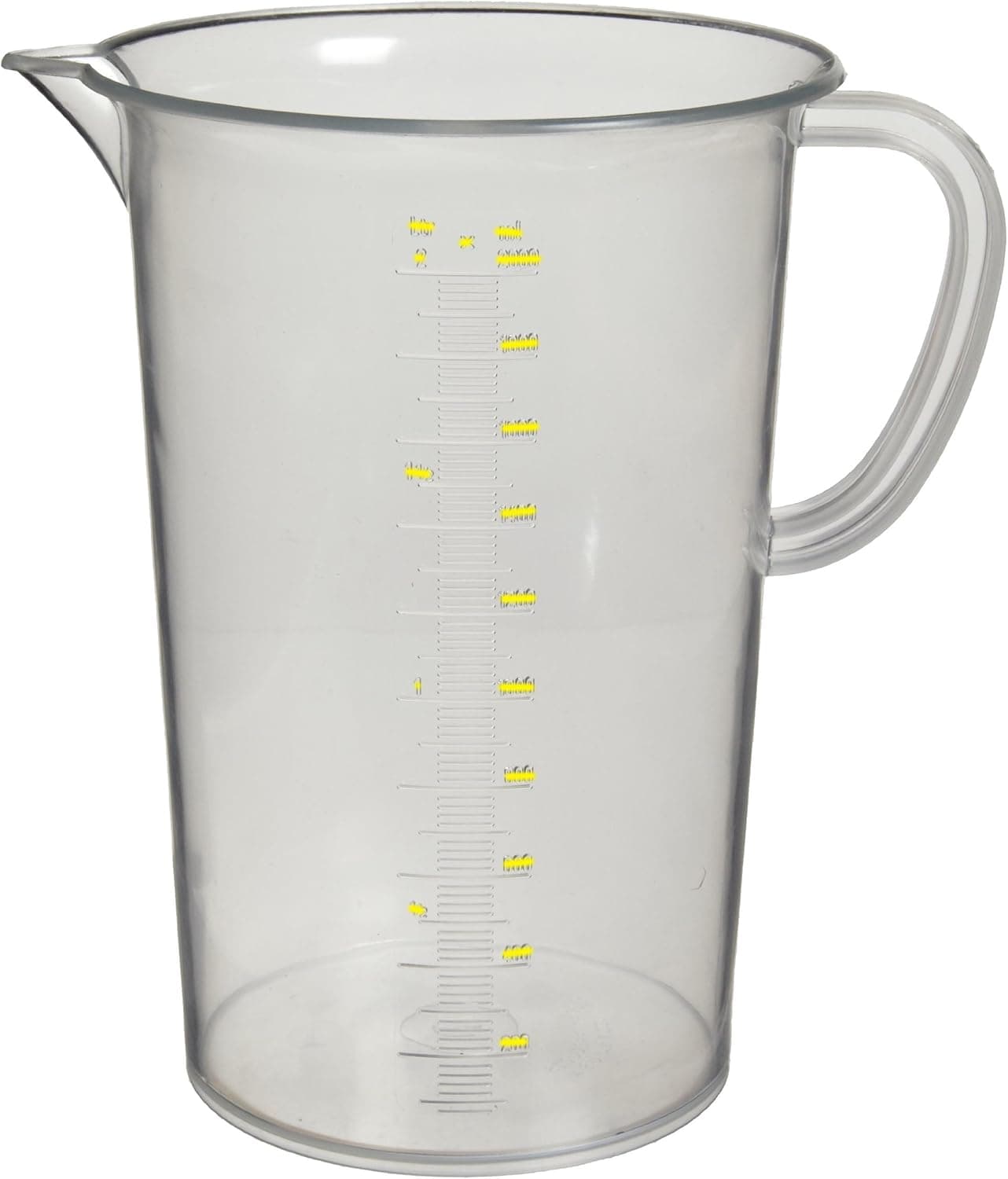
SP Bel-Art tall form 2000ml clear TPX graduated pitcher, a lab-grade container that handles lye well.
Price range: See on Amazon
What we liked
- + TPX plastic is lab-grade and resistant to many chemicals
- + 2000ml capacity handles lye solutions and oils
- + Clear graduated body shows volume and mixing clearly
Trade-offs
- - Lab-grade pitcher costs more than craft pitchers
- - Tall form can tip over if bumped while it is full
What this pitcher actually is
This is a Bel-Art brand lab pitcher made of Crystal Clear polymethylpentene, known as TPX, a plastic chosen in laboratories because it stays clear and resists a wide range of chemicals better than ordinary polypropylene or polyethylene. Bel-Art, part of SP Industries, sells this same pitcher line to research labs and industrial buyers, and soap makers have adopted it because a lye solution is essentially the same kind of caustic liquid a chemistry lab handles daily. The tall form stands about 8 inches high with a top outside diameter near 5.9 inches and a narrower 4 inch base, giving it a stable footprint for its height. Metric graduation lines are molded directly into the exterior wall in 20ml steps up to the full 2000ml capacity, so markings will not wash or rub off with repeated lye and oil use.
Handling heat and caustic liquids
The manufacturer rates this pitcher heat resistant to 175 degrees Celsius, about 347 Fahrenheit, and states it is steam autoclavable, which is well above the temperature range a lye and water mixture or a batch of melted oils reaches during normal soap making. That headroom matters because dissolving sodium hydroxide in water produces a rapid, strong exotherm that can push a weak container past its rated limit or leave it clouded and brittle over time. TPX plastic is also documented as chemical resistant, which is the main reason labs specify it for corrosive reagents rather than standard kitchen-grade plastic. Soap makers get the same benefit, a pitcher that keeps its clarity and strength through repeated lye batches instead of degrading after a season of use.
Using it day to day
The 2000ml size comfortably holds a lye solution or a batch of melted oils for a medium sized cold process recipe, and the molded handle and shaped pour spout are designed for controlled pouring rather than a splash-prone rim. Because the plastic is shatterproof rather than glass, it survives an accidental knock off a counter that would end a glass beaker, an advantage in a busy soap kitchen. The trade off with any tall, narrow pitcher is a higher center of gravity, so it can tip if bumped while full of hot liquid, and a soap maker should treat it with the same caution as glass lab ware near an active workspace. Cleaning is straightforward with warm water, since TPX does not absorb odors or stain as readily as some plastics.
How it compares with craft pitchers
Multi packs of plastic funnel pitchers marketed directly at soap makers, often sold in sets of four or six for filling molds, cost less per pitcher and work fine for measuring oils or finished soap batter. What they typically do not offer is documented chemical resistance or a stated heat rating anywhere near this pitcher's 347 F autoclave spec, since they are built as general kitchen and craft ware rather than lab equipment. A soap maker mixing lye regularly, or one who wants one dedicated, long lasting vessel for that single step, gets more assurance from a lab-rated pitcher like this one. Someone who only needs several cheap pitchers for pouring finished batter into individual molds is better served by a multi pack of lighter funnel pitchers instead.
Verdict and who should look elsewhere
This pitcher fits a soap maker who wants a single, durable, chemical resistant vessel specifically for mixing lye solutions or handling hot oils, and who does not mind paying a lab supply price for that reassurance. The clear graduated body and molded markings make it easy to measure accurately without a separate scale for liquids, and the heat rating gives real margin above what a lye reaction produces. Anyone who needs several inexpensive pitchers just for pouring soap batter into cavity molds will get more value from a multi pack of craft funnel pitchers instead. Buyers should also handle it like any tall vessel full of hot liquid, keeping it away from the edge of a workspace where it could be knocked over.
Frequently asked questions
What plastic is this pitcher made from?
It is made from Crystal Clear polymethylpentene, known as TPX, a chemical resistant plastic commonly used in laboratory ware.
Can it handle a hot lye solution safely?
The manufacturer rates it heat resistant to 175 degrees Celsius, about 347 Fahrenheit, and steam autoclavable, well above the heat a lye and water reaction produces. Always follow the lye manufacturer's own safety instructions for mixing and handling.
How precise are the graduation markings?
Metric graduations are molded into the exterior in 20ml increments up to the full 2000ml capacity.
Is this better than a plastic funnel pitcher for soap making?
For mixing lye solutions or hot oils it offers more documented chemical and heat resistance, though a multi pack of lighter funnel pitchers is cheaper for simply pouring finished batter into molds.
Prices change often, so check the current price and availability on Amazon.
Check price on AmazonSoap Making Nest may earn a commission from the link above.