Safety Works C5319M Chemical Nitrile Glove Flocked, Medium Review (2026)
Updated September 21, 2026 · Research-based review
Our verdict
A flock-lined green nitrile glove in the 5319 industrial glove family, rated at 15 mil thick and about 13 inches long for wrist coverage past a typical lye splash zone. It suits makers who want a reusable, chemical-resistant glove rather than thin disposables, as long as the Medium size actually fits.
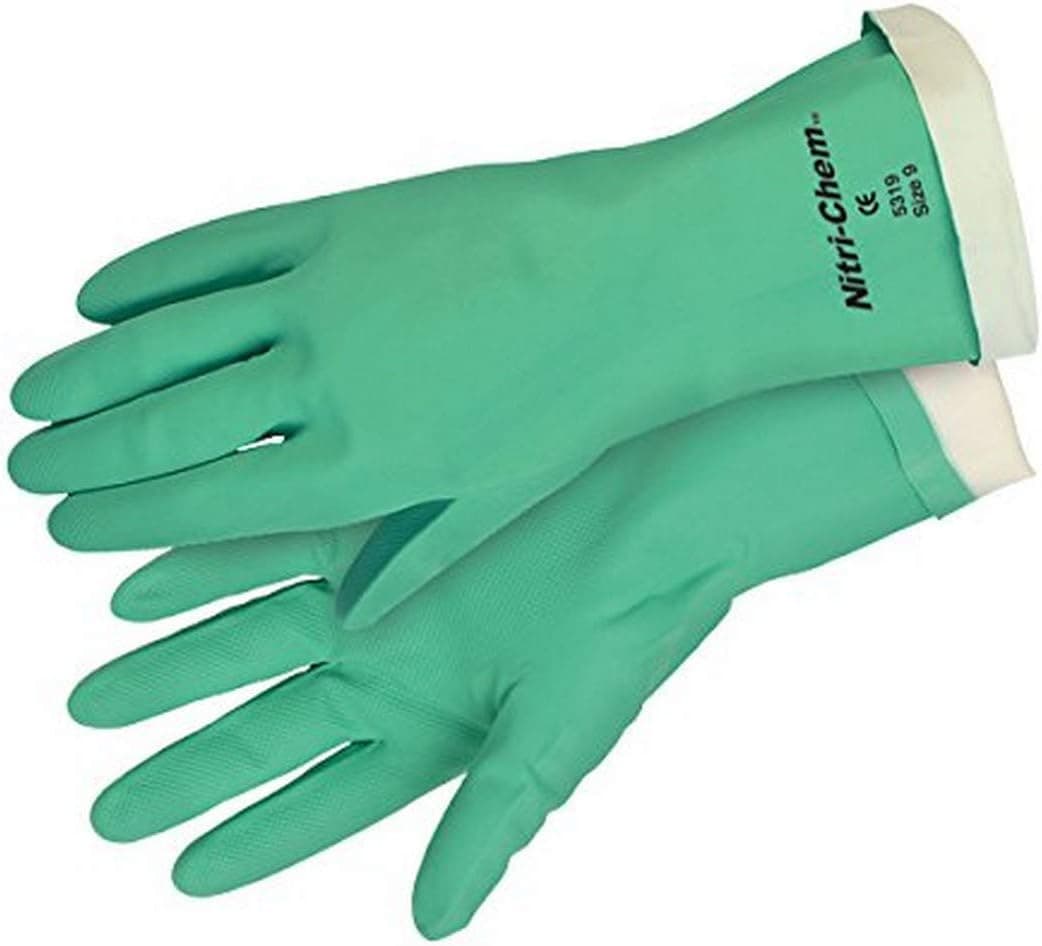
Safety Works C5319M chemical nitrile glove, flocked, in Medium, for handling lye and raw soap batter.
Price range: See on Amazon
What we liked
- + Chemical nitrile resists caustic lye splashes
- + Flocked lining is more comfortable for long soaping sessions
- + Medium size fits many adult hands with a secure grip
Trade-offs
- - Check your hand size, as a loose glove reduces dexterity
- - Reusable gloves must be rinsed well after each batch
Build and material
This is a green nitrile glove with a flocked cotton-style lining on the inside, sold in a Medium size under the Safety Works C5319 line. The nitrile shell is rated at 15 mil in thickness, which is considerably heavier than a typical disposable exam glove, and the glove measures about 13 inches in overall length, extending well up the forearm rather than stopping at the wrist. A raised diamond pattern is molded into the palm to improve grip when handling wet or slippery containers, and the glove is latex-free, which matters for makers or workshop participants who have a latex sensitivity or allergy.
Chemical resistance for lye work
Nitrile is a common material choice for cold process soap making specifically because it holds up against contact with lye and lye solution better than natural rubber or vinyl gloves do. The 15 mil thickness in this glove family is on the heavier end for nitrile, which generally translates to more resistance to punctures and to shorter periods of chemical contact compared with thinner disposable nitrile gloves. The 13 inch length also matters during the lye mixing step specifically, since splashes and drips can travel up the hand and wrist, and a longer glove keeps more of the forearm covered than a short-cuffed pair would.
Comfort with the flocked lining
The flock lining on the inside of the glove is designed to make the nitrile shell more comfortable against skin during longer wear, absorbing some sweat and reducing the clammy feeling that a plain, unlined nitrile or rubber glove can produce. For soap makers who are mixing lye, pouring, and working a batch through trace over a period of several minutes rather than seconds, that added comfort can make a real difference versus a disposable glove that is only meant for brief single-use handling. The tradeoff is that a flocked lining is not meant for repeated quick glove changes the way thin disposables are, since these are built as a reusable pair.
Getting the right size
This specific listing is for the Medium size, and the same C5319 glove family is also sold in Small and X-Large, along with other sizes in the broader model range, so checking hand measurements against the seller's sizing guidance before ordering is worthwhile. A glove that runs loose reduces dexterity for precise pouring and mixing tasks, while a glove that is too tight can be harder to pull on and off, especially with wet hands. Because nitrile gloves in general do not stretch as much as latex, getting the size right matters more here than it might for a more flexible glove material.
Care and reuse
As a reusable glove rather than a disposable one, these should be rinsed thoroughly after each use to remove any lye residue or soap batter before being set aside to dry and stored for the next session. The manufacturer also states that component materials comply with federal regulations for food contact, which is a relevant detail for makers who use the same general glove style across both soap making and food-adjacent tasks. Inspecting the nitrile shell periodically for small punctures or thinning spots, particularly at the fingertips where wear tends to show up first, is a sensible habit for anyone relying on these gloves for regular lye handling.
Frequently asked questions
Are these gloves resistant to lye?
Yes, nitrile is a common material for handling lye in cold process soap making, and this 15 mil glove is on the heavier, more resistant end of that range.
How long are the gloves?
This glove family is about 13 inches long, extending well up the forearm past the wrist for better splash coverage.
Are these gloves latex-free?
Yes, they are made of nitrile rather than latex, which makes them a suitable option for people with latex sensitivities.
Can I reuse these gloves for multiple batches?
Yes, they are designed as a reusable pair rather than a single-use disposable, so rinsing and drying them after each session is recommended.
Prices change often, so check the current price and availability on Amazon.
Check price on AmazonSoap Making Nest may earn a commission from the link above.